Hazard assessment on arrival
We look for lean, cracks, root plate movement, hanging limbs, and tensioned wood so cuts are made in a safe order.
Serving San Antonio, Texas & surrounding areas
24/7 Emergency Response
When a tree or limb comes down at the worst time, you need a crew that can secure the hazard fast, protect your property, and leave the area safe to use again.
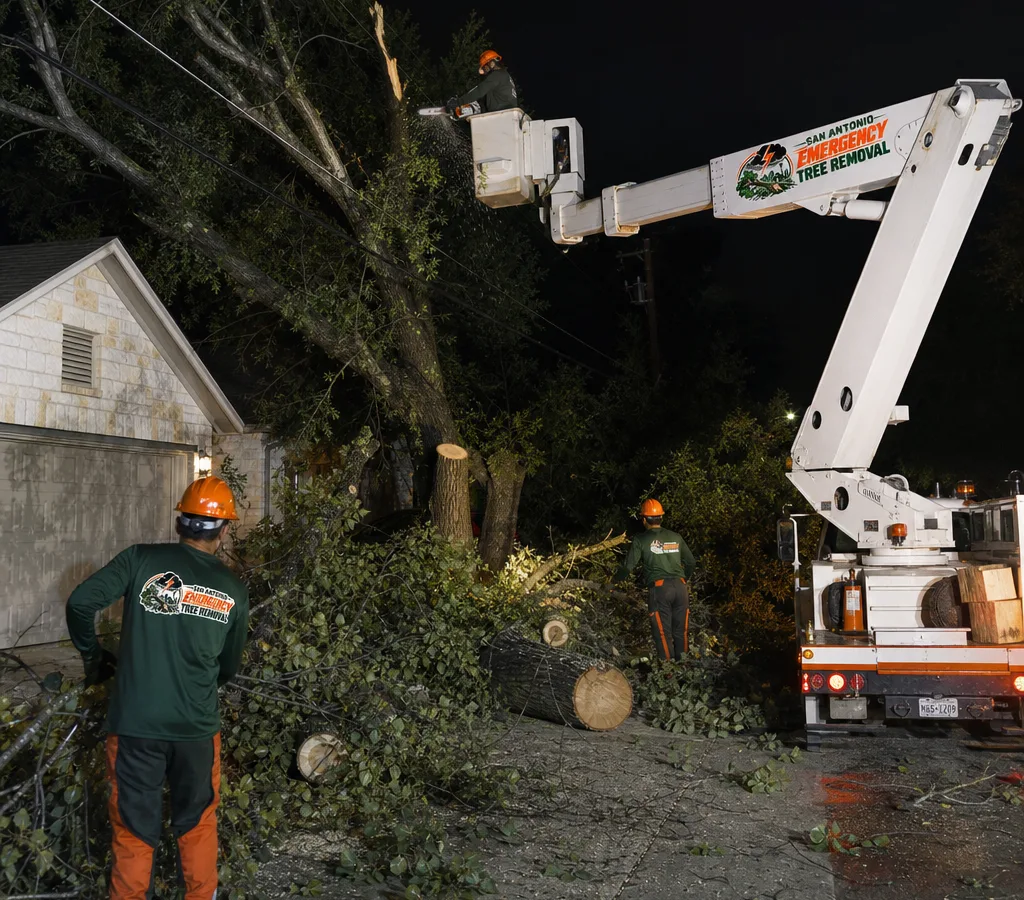
24 Hour Tree Removal is for situations that cannot wait: a tree on a house, a split trunk leaning toward a roof, a heavy limb blocking a driveway, or storm debris tangled in fences and lines. San Antonio's sudden windstorms and saturated ground after heavy rain can turn a weak attachment into a failure quickly.
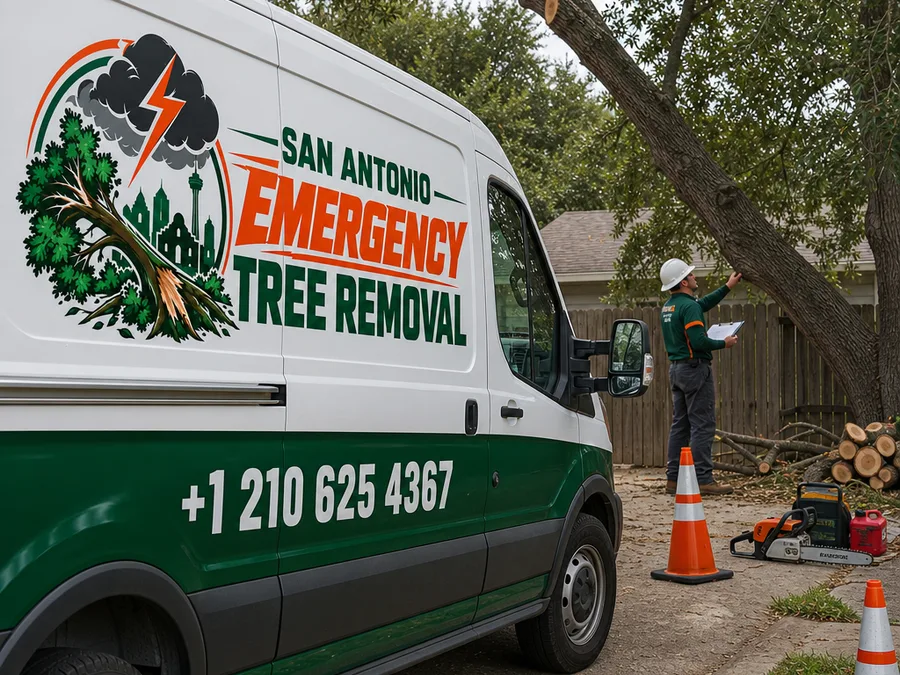
San Antonio Emergency Tree Removal focuses on rapid hazard control first. That means setting a safe work zone, identifying what is under tension, and planning cuts so weight comes down in controlled pieces. If the tree is resting on a structure, the goal is to relieve load without creating more damage. If it is in the street or alley, the goal is to reopen access and reduce risk for neighbors.
If you are researching service quality and scope beyond emergencies, our tree removal service covers the broader options and what to expect for planned removals.
We look for lean, cracks, root plate movement, hanging limbs, and tensioned wood so cuts are made in a safe order.
For trees near roofs, vehicles, fences, or neighboring property, we section the tree and lower pieces with ropes and rigging instead of dropping them.
San Antonio lots can have narrow side yards, gates, and back fences. We plan equipment placement and carry-out routes to reduce impact.
We cut, stack, and remove debris so the area is usable again. Stump work is handled separately when it is not part of the emergency.
You get a straightforward scope: what is dangerous now, what can wait, and what the safest next steps are.
We can describe what failed and what was removed, which helps when you are coordinating with an insurer or property manager.
Emergency calls tend to fall into a few patterns, and each one changes how the removal is approached:
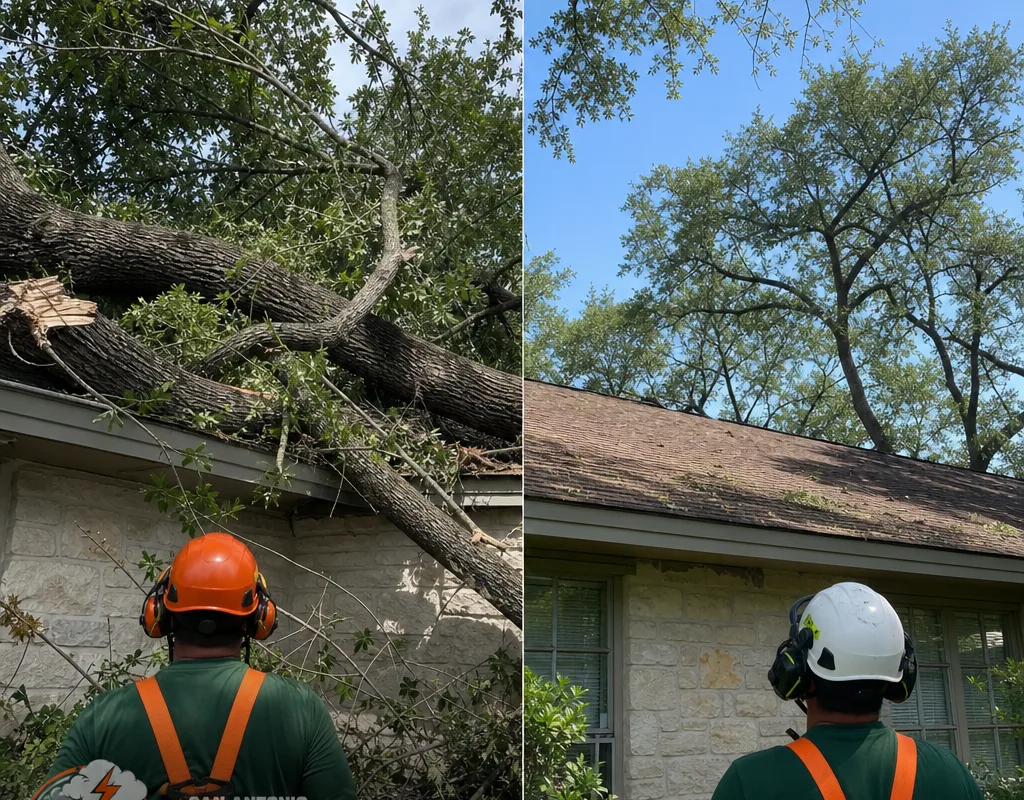
Storm-failed limbs over roofs and patios: Large live oak limbs can be extremely heavy. We usually reduce weight in small sections and keep pieces off shingles, gutters, and patio covers.
Split trunks and leaning trees: When a trunk is cracked or a tree has shifted at the roots, the danger is movement while cutting. We stabilize the work area and remove in a sequence that avoids a sudden roll or swing.
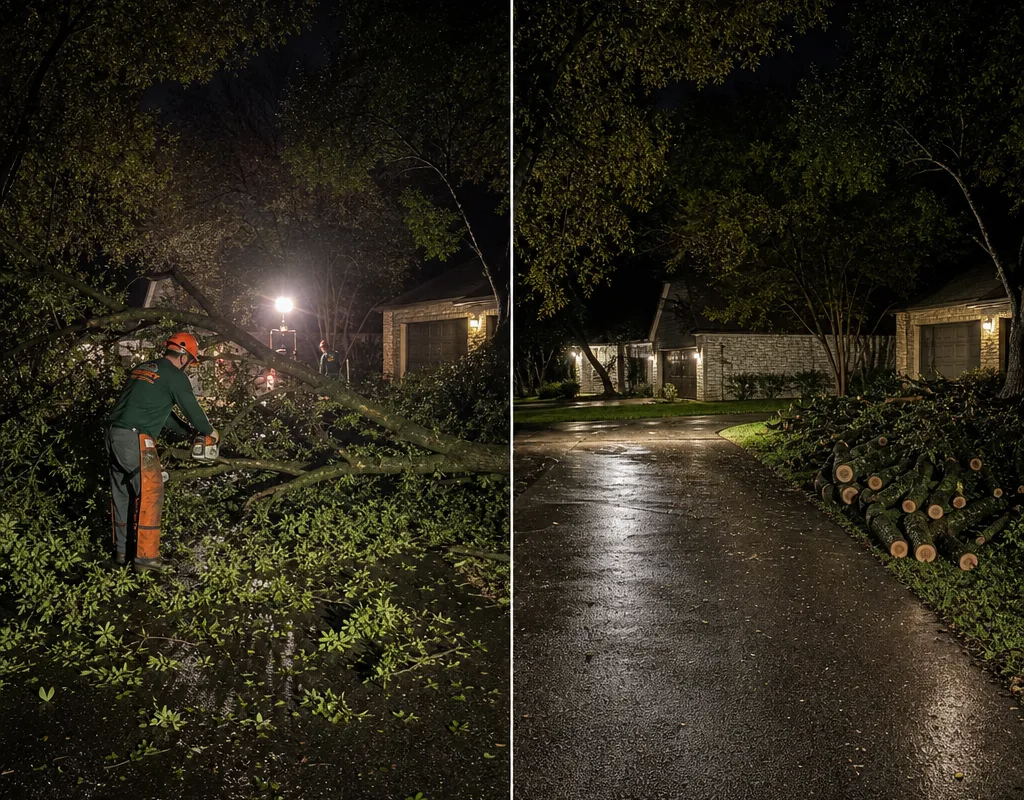
Trees across driveways, alleys, and streets: We focus on opening access first, then complete the cut-up and hauling so vehicles and emergency access are restored.
Hanging limbs (widowmakers): Partially broken branches caught in the canopy can drop later, even after the wind dies down. These usually require climbing or a bucket truck, plus careful tie-in and rigging.
Trees entangled with overhead lines: If a limb is on or close to energized lines, do not approach it. Keep people back and contact the utility first. Once the area is confirmed safe for work, we remove the tree material using methods appropriate to the clearance.
Because this is urgent work, we keep the plan simple: make it safe, prevent secondary damage, then clean up so you can get back inside the home or reopen the property.
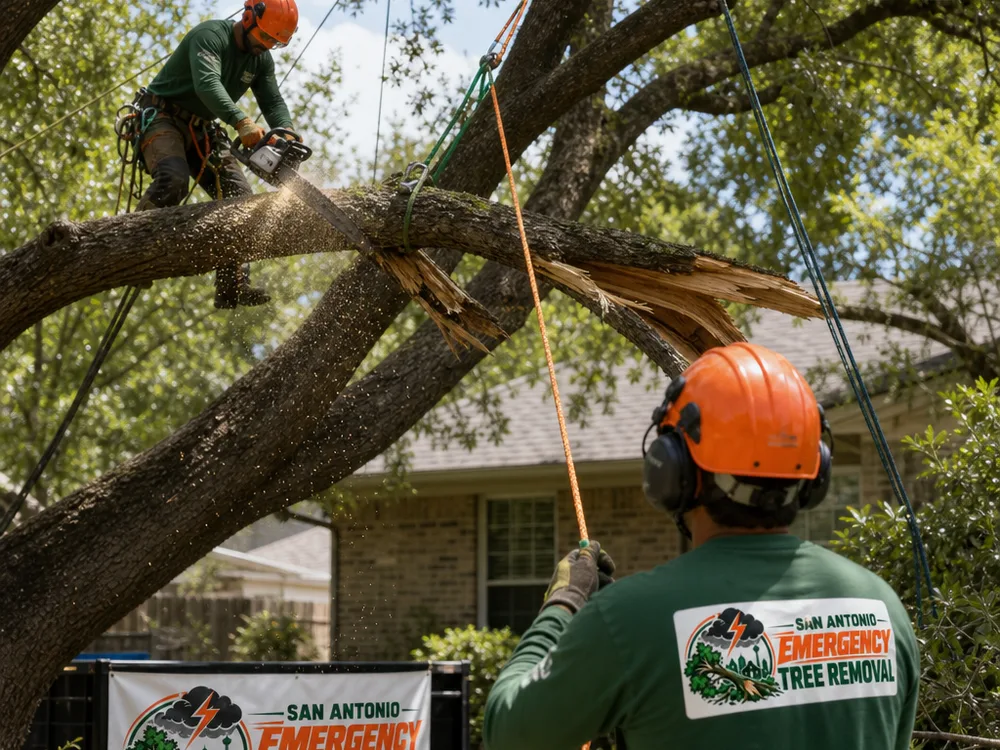
We identify immediate hazards, set boundaries, and decide whether the situation needs utility involvement before any cutting starts.
You get a clear explanation of what will be removed right now to eliminate danger, and what can be scheduled later if more work is needed.
We cut and lower sections in a safe order, using rigging, wedges, and appropriate equipment to control weight and movement.
We clear pathways, driveways, and entrances as a priority, then finish cleanup and haul-off based on the agreed scope.
We confirm the hazard is addressed and review any remaining concerns, such as damaged fences, compromised trunks, or additional limbs that should be dealt with soon.
Most 24 hour tree removal jobs in San Antonio typically range from about $450 to $2,500+, with smaller limb removals often closer to $250 to $750 and complex removals on roofs, tight access, or heavy rigging commonly higher. Pricing changes based on tree size and species, where it fell (roof, fence, driveway), access for trucks and equipment, debris volume, and whether work must be done in sections for safety. The exact cost is confirmed after an on-site hazard assessment so the scope matches what is actually unsafe.
Response time depends on storm volume and travel conditions, but emergency calls are prioritized by immediate danger to people, homes, and blocked access. When you reach out, share whether the tree is on a structure, blocking a driveway, or hanging overhead so we can triage correctly and arrive with the right equipment.
Yes: keep everyone away from the tree, especially if limbs are hanging or the trunk is leaning, and do not try to cut or move anything under tension. If a tree or limb is touching or near overhead lines, stay back and contact the utility first; once the area is confirmed safe, we can remove the tree material.
In many cases, yes, by taking the tree down in small controlled sections and relieving weight in a planned sequence. We avoid yanking or rolling heavy wood across shingles and focus on controlled lowering with rigging when there is a risk of sliding or swinging.
Often, yes, if the scope includes haul-off and conditions allow safe loading. When emergency demand is high, some jobs are completed in phases: the immediate hazard is removed first, then full haul-off and fine cleanup are finished as soon as scheduling and access allow.
Usually not as part of the emergency response, because the urgent priority is getting the dangerous tree or limb off structures and out of access routes. If you want the stump addressed later, we can discuss scheduling that work once the site is stable.
Share what the tree hit (roof, fence, vehicle), whether any part is hanging or suspended, if access is through a narrow gate or alley, and whether overhead lines are nearby. Photos from a safe distance help, but the final scope and price are confirmed after an on-site assessment because tension, cracks, and root movement are not always visible in pictures.
Tell us what happened and what the tree is resting on. We will prioritize the hazard, explain the safest plan, and work to get your property secure and accessible again.