Is the tree actually hazardous?
We evaluate likely failure points—limb unions, trunk defects, and root stability—and the targets below like roofs, driveways, fences, and play areas, then explain the risk in plain terms.
Serving San Antonio, Texas & surrounding areas
24/7 Emergency Response
Get a clear, safety-first plan for storm damage, hazardous limbs, or a declining tree. A certified arborist can assess risk, document conditions, and guide the right next step before work starts.
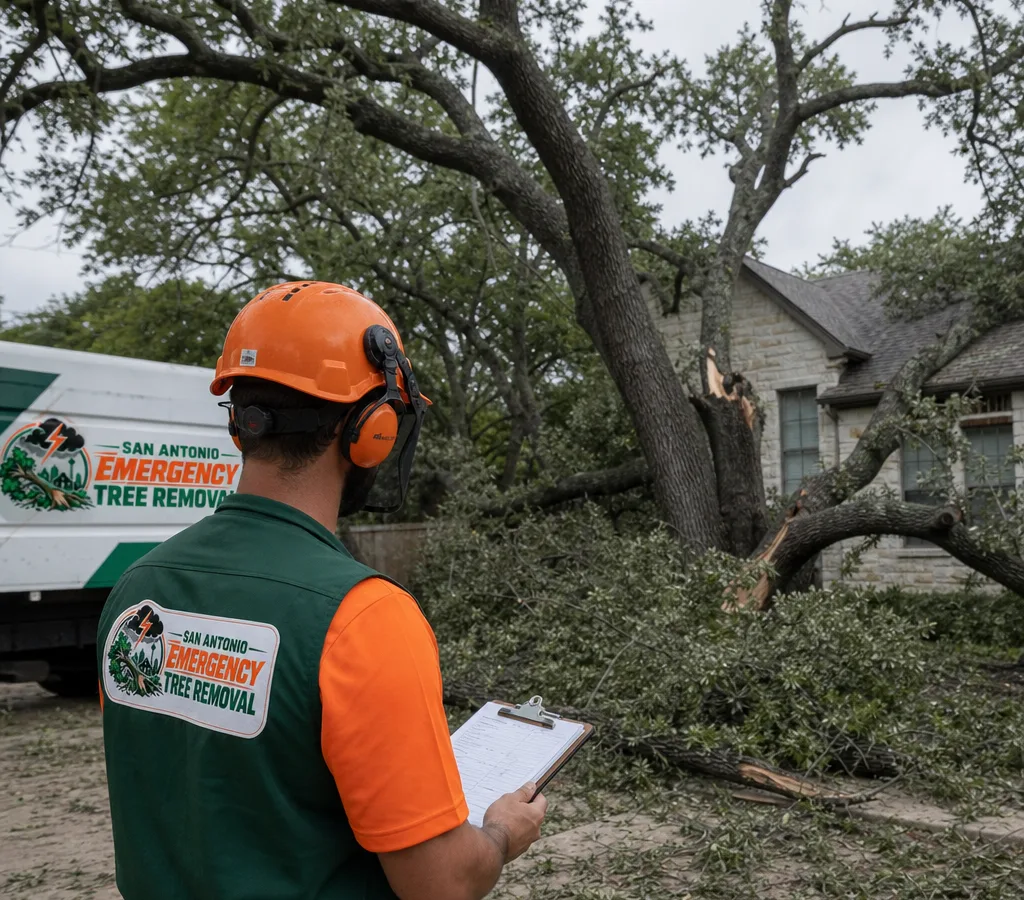
Searching for a certified arborist San Antonio TX usually means something is time-sensitive: a tree hit by wind, a limb over a roofline, roots lifting a sidewalk, or a tree that is thinning out and dropping deadwood. In those moments, the most valuable service is a professional assessment you can act on.
A certified arborist looks at structure, defects, targets, and site conditions. That includes canopy density, deadwood, cracks and included bark, lean and root plate movement, trunk cavities, past pruning damage, and clearance to structures. The outcome should be a simple, written explanation of the concern, the level of risk, and what work is appropriate—and what is not.
At San Antonio Emergency Tree Removal, our certified arborist support is built for real-world situations: fast triage after storms, honest recommendations when a tree can be preserved, and practical guidance when removal is the safest option. If the tree is near service drops or overhead lines, the plan also accounts for utility safety and clearance requirements before any cutting begins.
We evaluate likely failure points—limb unions, trunk defects, and root stability—and the targets below like roofs, driveways, fences, and play areas, then explain the risk in plain terms.
Selective pruning can reduce risk when structure is sound. We look for options like deadwood removal and weight reduction rather than defaulting to full removal.
Some conditions are immediate, while others can be monitored. You get a timeframe so you can plan instead of guessing.
Tight gates, backyard drops, patios, and overhead obstacles change the safest method. We map out how crews and equipment can reach the work area without causing avoidable damage.
Storm breaks often leave hanging limbs and torn fibers. We prioritize making the area safe first, then address corrective pruning or removal based on what the tree can realistically recover from.
San Antonio's trees take real punishment during severe thunderstorms and straight-line winds. After a storm, the biggest hazards are usually broken limbs hung up in the canopy, partially failed leaders, and trees that shifted at the root plate. Those situations can look stable from the street and still fail later.
Neighborhood layout matters too. In Alamo Heights and Terrell Hills, mature trees often sit close to homes and driveways, so rigging and controlled lowering are often part of the approach. In Stone Oak, newer lots and tighter side yards can limit equipment access, which changes how the work is staged. Downtown and near King William, confined streets and parked cars can make debris handling and staging more complex.
If you are also comparing providers for more general work, start with a team that treats assessment as the first deliverable. You can get an overview of how we handle tree work as a whole through our Tree Removal Service in San Antonio.
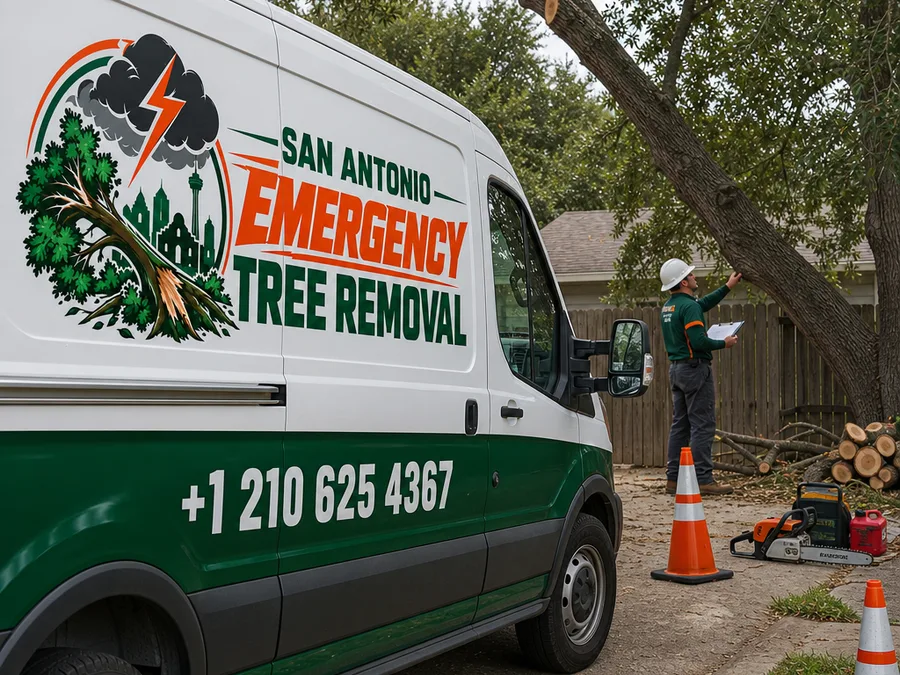
We start by identifying immediate risks: hanging limbs, split leaders, heaved roots, contact with structures, and anything that could fall while people are nearby.
We explain what we are seeing, what likely caused it, and which option fits: targeted pruning, cabling or bracing where appropriate, monitoring, or removal when risk is unacceptable.
You get a clear scope that covers access, protection for nearby structures, debris handling, and any constraints such as tight gates or overhead obstacles.
If work moves forward, we confirm what needs to be moved—vehicles or patio items—and where the crew will stage equipment and material.
After the work, the area is cleared of debris and we walk the site with you so you know what was done and what to watch for next.
Most certified arborist visits in San Antonio typically run about $150 to $350 for an on-site assessment, while complex situations—large properties, multiple trees, storm hazards, or written documentation needs—can be $350 to $750+. Price depends on the number of trees, ease of access, urgency, and whether you need a formal written report versus a field assessment with recommendations. Exact pricing is confirmed after the on-site evaluation and the scope you actually need.
“After a storm we had a big limb cracked over the driveway. The arborist explained what was actually dangerous, what could wait, and what should be removed right away. The plan made sense and the cleanup was thorough.”
“I appreciated that the assessment wasn't a sales pitch. They showed me the defects, explained the risks to the roofline, and gave options. We decided on removal for one tree and pruning on another.”
Yes. A certified arborist can evaluate storm damage by checking for hanging limbs, cracks and splits, failed unions, and root plate movement, then advising whether the tree can be pruned for recovery or should be removed due to unacceptable risk. After storms, the most urgent hazards are often the ones you cannot see from the ground, so an on-site inspection is the safest way to decide.
You should expect an on-site walk-through, a discussion of targets such as the roof, driveway, power drop, and sidewalks, and a clear recommendation with the reasons behind it. For higher-risk trees, an arborist will also talk through access, rigging needs, and how the crew would control sections to protect structures and landscaping.
We handle both. If a tree or limb is creating an immediate hazard, the priority is making the site safe first, then completing corrective pruning or removal based on the arborist's assessment of remaining structure and risk.
Removal should be recommended when risk cannot be reduced to an acceptable level through pruning or support, or when the tree is in irreversible decline and likely to fail. A solid assessment explains why removal is the safest option, what the likely failure mode is, and what alternatives were considered.
Move vehicles away from the tree's drop zone, secure pets, and note any recent changes like fresh lean, new cracks, or sudden leaf loss. If the tree is near overhead lines, keep distance from the area and avoid touching branches that may be energized until the situation is evaluated safely.
Yes, we can provide written notes of observed defects, risk considerations, and recommended next steps when you need something you can share with a property manager, insurance adjuster, or HOA. Tell us upfront what level of documentation you need so the visit can be scoped correctly.
Share what you are seeing and where the tree sits on the property. We will confirm next steps, explain the safety plan, and provide a clear scope for pruning, hazard mitigation, or removal based on the arborist's findings.