Downed trees and blocked access
Removal of trees that fell across driveways, gates, sidewalks, or parked vehicles, with controlled cuts to prevent rolling or shifting.
Serving San Antonio, Texas & surrounding areas
24/7 Emergency Response
When a tree or limb is down, leaning, or tangled in lines, you need a crew that can dispatch quickly, secure the area, and remove the hazard without creating new damage.
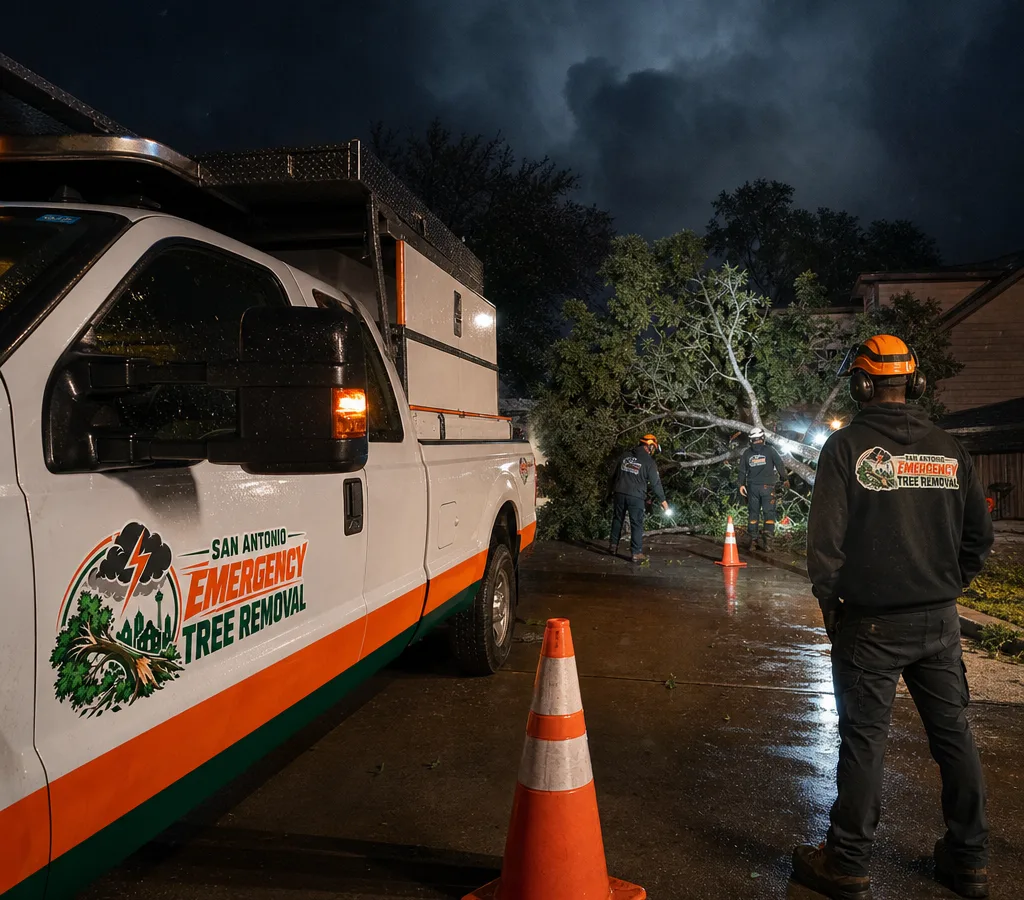
Emergency Tree Removal is for situations where waiting increases risk: a split trunk, a limb hung up over a roof, a tree blocking a driveway, or a failure that could take down fencing and vehicles with the next gust.
San Antonio weather can turn fast. After strong thunderstorms and straight-line winds, we often find multiple failures in the same area: cracked leaders, uprooted trees with stressed root plates, and heavy limbs suspended in neighboring canopies. Those “hung” limbs can drop hours later, even if things look calm.
San Antonio Emergency Tree Removal focuses on making the site safe first, then completing removal and cleanup based on what the tree is doing right now, not what it looked like before the storm. If you also want a non-urgent plan for trees that are simply aging or crowded, our Tree Removal Service covers standard scheduling and scope options.
Removal of trees that fell across driveways, gates, sidewalks, or parked vehicles, with controlled cuts to prevent rolling or shifting.
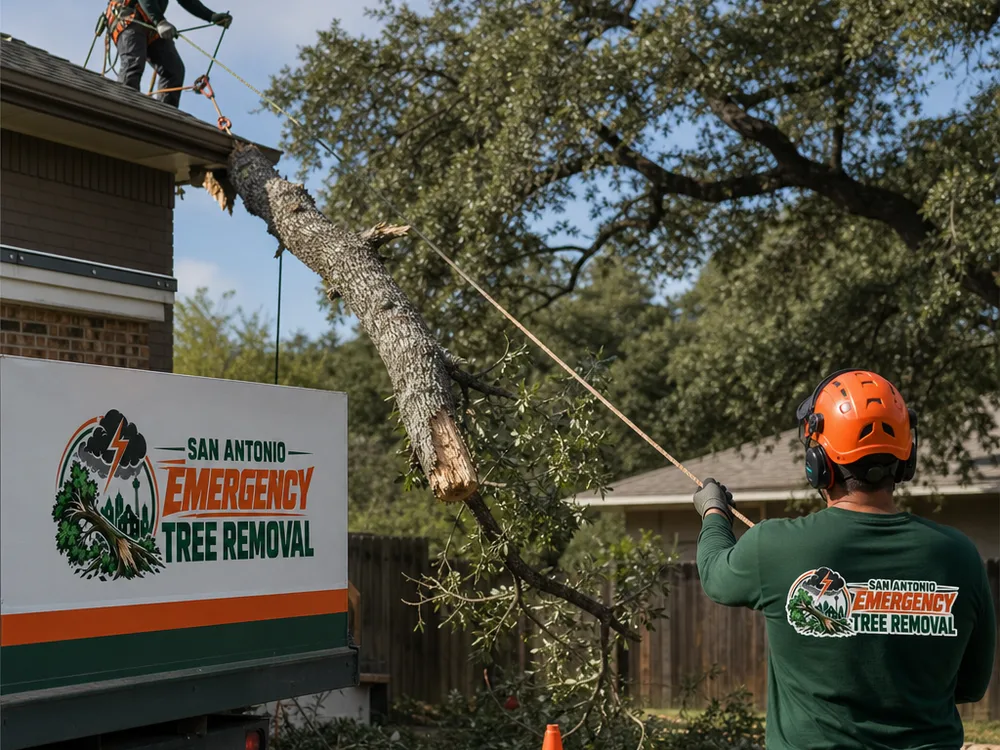
Rigging and piecing down large limbs above roofs, patios, and carports to reduce the chance of secondary impact damage.
Assessment of hinge points, crack propagation, and lean direction, then removal or stabilization steps based on what is safest on site.
Separation cuts and controlled lowering when multiple canopies are locked together, which can behave unpredictably when freed.
Cut, stack, and haul away wood and brush created by the emergency work, with a final rake and blow-down of the work area.
A written plan for what will be removed now, what can wait, and what the cleanup includes, so expectations are set before the saw starts.
Emergency removals are rarely wide-open jobs. In many San Antonio neighborhoods, trees sit close to homes, overhead service drops, fences, and detached garages. Safe emergency work is mostly planning and control.
We start by establishing a drop zone, checking for unstable root plates and tensioned wood, and identifying targets: rooflines, vehicles, AC units, and neighbor fencing. Then we choose the safest method for the situation, which may include:
If a tree is near overhead electrical lines, the safe first move is to coordinate with the utility and keep people well back until the area is cleared for work. If you suspect a limb is contacting a line, treat it as energized and keep everyone away.
Mature canopy trees near older homes and tight setbacks mean more sectional work and careful lowering.
Higher winds through open areas can leave partially failed limbs hanging in the canopy, calling for cautious top-down removal.
Limited access and narrow streets can affect where equipment can stage and how debris is loaded.
Mixed lot sizes and closely spaced fences often require controlled rigging to protect adjacent property.
You describe what happened and what is at risk—roof, driveway access, vehicles, or lines. We prioritize immediate hazards and blocked access, then schedule the fastest safe response.
We look for unstable lean, root plate lift, trunk splits, hung limbs, and tensioned wood. We set a work zone and confirm what will be removed now versus what can be addressed later.
We cut and lower wood in manageable sections using the method that best fits the site: directional felling where possible, sectional removal and rigging where targets are close.
We load and haul debris generated by the emergency work, or stack it neatly if requested. Final cleanup includes raking and blowing the work area so you are not left with a mess.
We walk the area with you, confirm the scope is complete, and point out any remaining risks such as cracked unions, remaining hangers, or damaged trees that may need scheduled work.
Emergency tree removal in San Antonio typically ranges from about $450 to $2,500+, depending on the size of the tree or limb and the risk level. A straightforward downed-tree cut-up and haul-off is often on the lower end, while a hazardous, rigged removal over a roof or near lines can push costs higher.
Final pricing is mainly driven by diameter and height, how close the work is to structures, whether rigging or specialized access is required, after-hours timing, and how much debris you want hauled away. The exact cost is confirmed after an on-site safety assessment and a written scope.
“A big limb cracked and hung over our roof after a storm. They showed up fast, explained what was under tension, and lowered everything down in pieces. Cleanup was thorough and the driveway was usable again the same day.”
“Our tree leaned hard toward the neighbor's fence and we were worried it would go overnight. The crew set a safe zone, removed it without hitting anything, and hauled off the debris. Clear scope, clear communication.”
It is an emergency when the tree or limb is actively unsafe or blocking access, such as a tree on a structure, a split trunk, a hanging limb, or a tree that is leaning with a lifted root plate. If the tree is stable and the concern is long-term health or convenience, it is usually better handled as scheduled work after a normal inspection.
Yes, but the first step is making the scene safe and controlling load so the tree does not shift into the structure during cutting. We typically use sectional removal and rigging to lift and lower pieces in a controlled way, then clear debris so repairs can start.
We can work near lines only when it is safe and permitted for the situation. If any part of the tree is contacting a line, treat it as energized and keep everyone back; the utility must address the electrical hazard before removal work proceeds.
Response time depends on demand and road conditions, but we triage calls for immediate hazards—trees on structures, blocked access, severe lean, and hanging limbs. After major weather, we prioritize the highest-risk situations first and give a realistic arrival window based on the dispatch queue.
Yes. Emergency removal typically includes cutting and managing the debris created by the work, with haul-off available for the wood and brush. If you want to keep firewood lengths, we can usually cut and stack it as part of the scope.
For most emergency jobs, being available at the start helps so we can confirm access, boundaries, and what you want done with debris. If you cannot be on site, we can often proceed with clear written authorization and photos, as long as we can safely access the work area.
Keep people and pets away from the tree, especially beneath hanging limbs or a leaning trunk, and do not try to cut or pull anything with vehicles. If a line is involved, stay back and wait for the area to be made safe before approaching.
Tell us what happened, what is at risk, and whether access is blocked. We will confirm the safest plan, provide a written scope, and get the hazard removed as quickly as conditions allow.