Hazard-first assessment
We start by identifying the failure point—split trunk, cracked union, uprooting, or suspended limbs—and building a cutting plan around what can move when tension releases.
Serving San Antonio, Texas & surrounding areas
24/7 Emergency Response
When a tree is cracked, leaning, or tangled in lines after a storm, you need a crew that can assess the risk fast, cut it down safely, and leave your property clean and usable again.
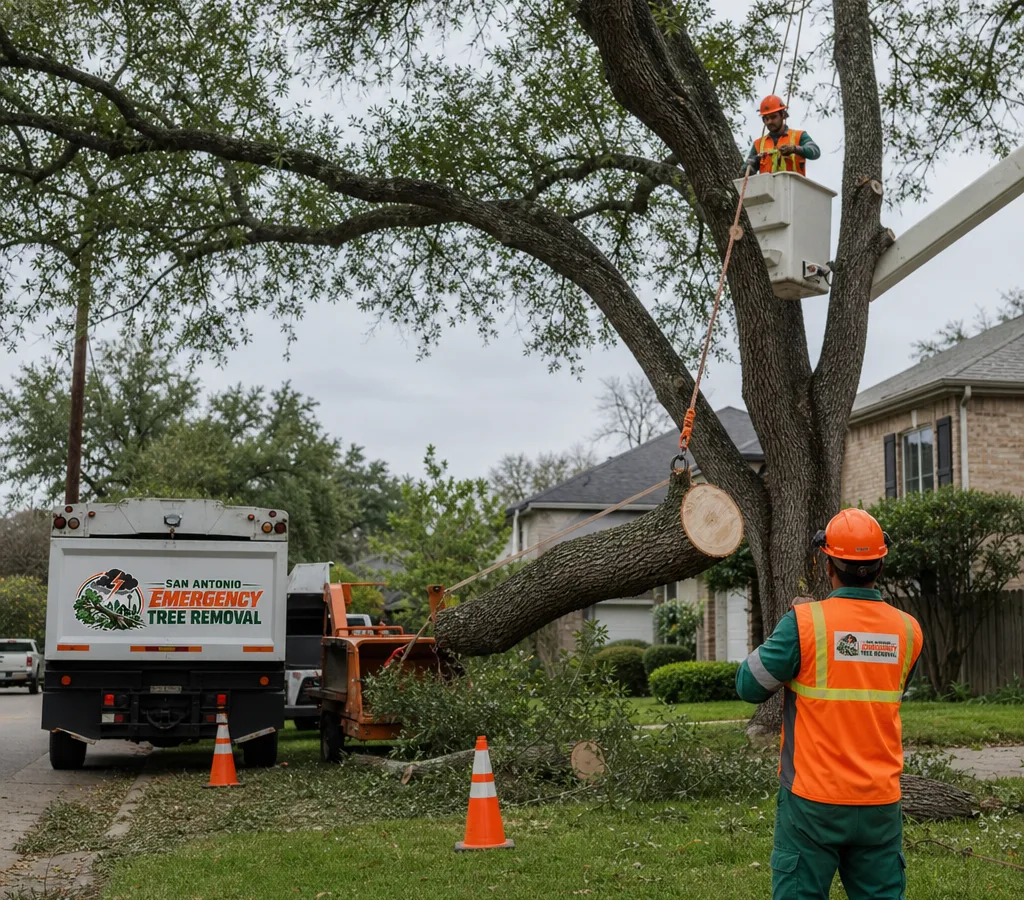
If you searched tree cutting San Antonio, you are probably dealing with a tree that is unsafe right now or a tree that has to come down without damaging your roof, fence, driveway, or nearby lines. San Antonio Emergency Tree Removal provides tree cutting for storm damage, hazardous leans, dead or split trunks, and tight-access removals where a straight fell is not possible.
In San Antonio, wind events and saturated soil can turn a compromised tree into a same-day problem. A tree that looks stable can fail at the root plate, and a partially fallen tree can shift while you are trying to move branches. Our crew focuses on controlled cuts, rigging where needed, and a clear work zone so the job is handled safely from the first cut to the final cleanup.
You will get a straightforward plan for how the tree will be brought down, what needs to be removed first—limbs, top sections, or a hung-up trunk—and how debris will be handled. If what you actually need is broader removal help beyond cutting, you can start with our tree removal service for full-scope options.
We start by identifying the failure point—split trunk, cracked union, uprooting, or suspended limbs—and building a cutting plan around what can move when tension releases.
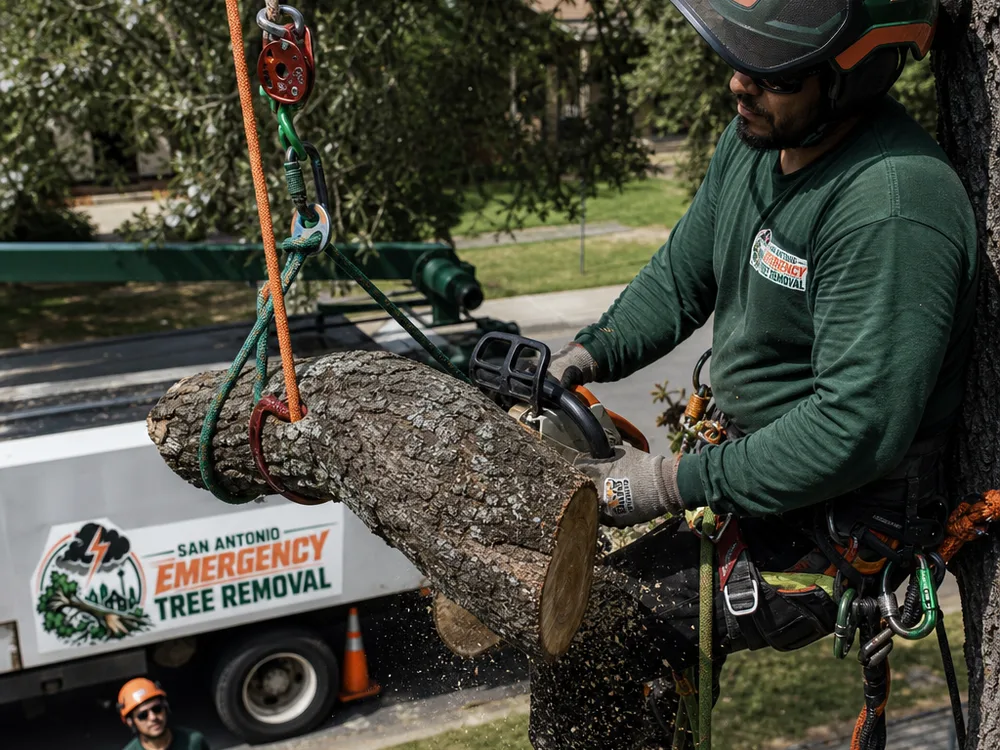
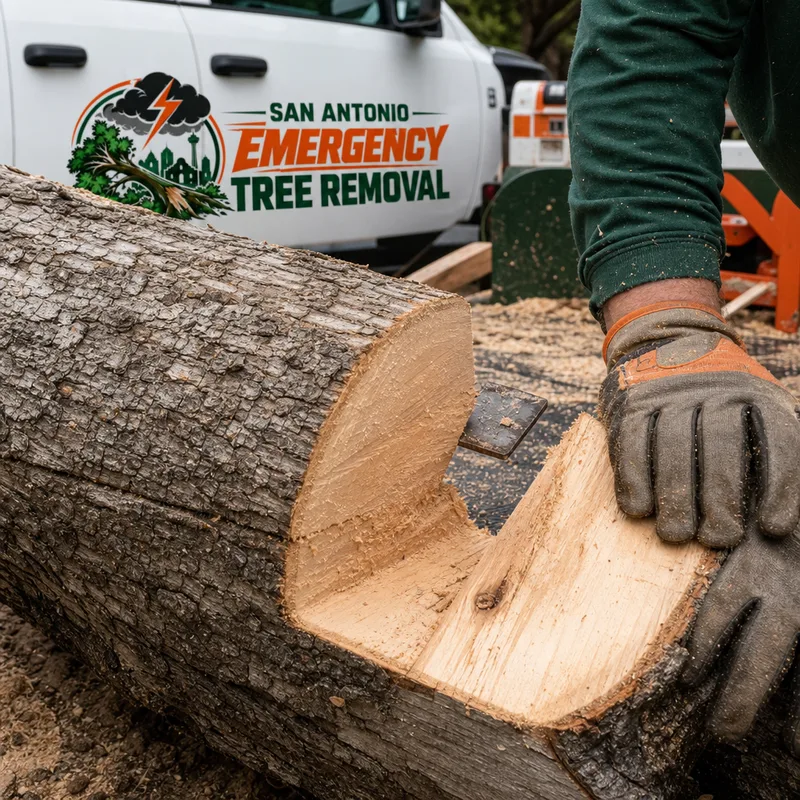
When a tree cannot be safely felled in one piece, we section it down using proper notch and back-cut technique, plus rigging and lowering when there are targets nearby.
For partially fallen trees, we prioritize making the area safe, reducing weight, and preventing sudden shifts while we cut and remove sections.
We cut, haul, and clear the work area so you are not left with piles of brush and heavy rounds. Stacking or haul-off is confirmed before work starts.
You will know what is included: what gets cut, what gets removed, access expectations, and any constraints like fences, gates, or steep driveways.
Emergency calls usually fall into a few categories: a tree is leaning toward a home, a large limb has torn out and left a split that is still attached, or a tree has fallen and is pinned against something. Each situation has different risks, so we do not treat every job like a simple chainsaw cut.
We look for tension and compression in the wood, the direction of lean, and what the crown is resting on. If there are overhead lines involved, we keep a conservative perimeter and coordinate for safety rather than guessing. The goal is to bring down sections in a controlled way so the remaining trunk does not roll, kick back, or swing into structures.
San Antonio has many lots where trees sit close to fences, carports, and neighboring properties. In areas with smaller setbacks and mature canopy, like Alamo Heights, precision sectioning and careful lowering matter more than speed. In Stone Oak and other hillier parts of town, access, slopes, and long driveways can change how equipment is staged and how debris is removed.
If you are unsure whether a tree is safe to wait on, treat cracks, sudden leans, and lifted soil around the base as urgent. Getting a professional on site quickly is often the difference between a manageable removal and property damage.
Tree cutting in San Antonio typically ranges from about $250 to $1,500+ depending on the size of the tree and how complex the takedown is. A small tree in open space may be in the $250 to $500 range, while a medium to large tree that must be sectioned down near structures often runs $700 to $1,500+.
Your price changes with height and trunk diameter, lean and storm damage, proximity to roofs or lines, gate access, haul-off volume, and whether rigging or climbing is required. Exact pricing is confirmed after an on-site assessment of the tree and the work area.
Tell us what happened and what the tree is contacting—roof, fence, driveway, or line area. We will set expectations for timing and what to keep clear until the crew arrives.
We identify bind points, fall path limitations, and targets. Then we outline whether the tree can be safely felled or needs a sectional takedown.
We establish a drop zone, protect access paths where possible, and position equipment for safe cutting and debris handling.
We cut in the safest sequence for the situation: reducing weight, removing hazardous limbs, then taking down the trunk in sections as needed.
We clear debris per the agreed scope and confirm that the hazard is addressed before we leave.
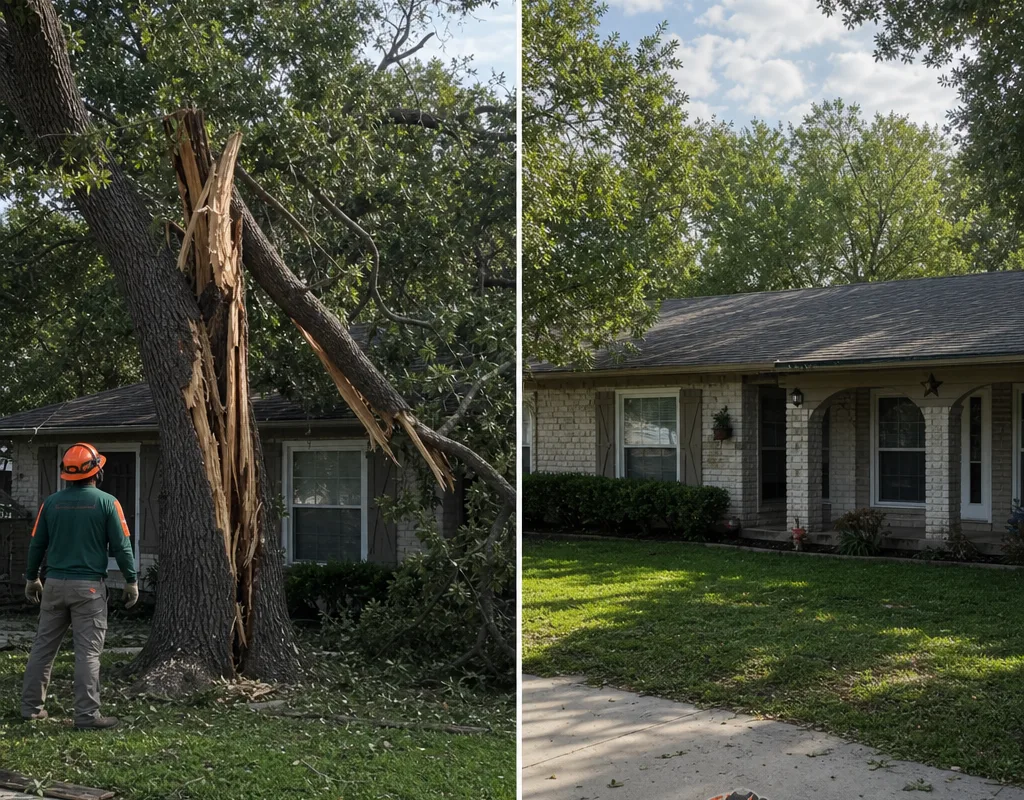
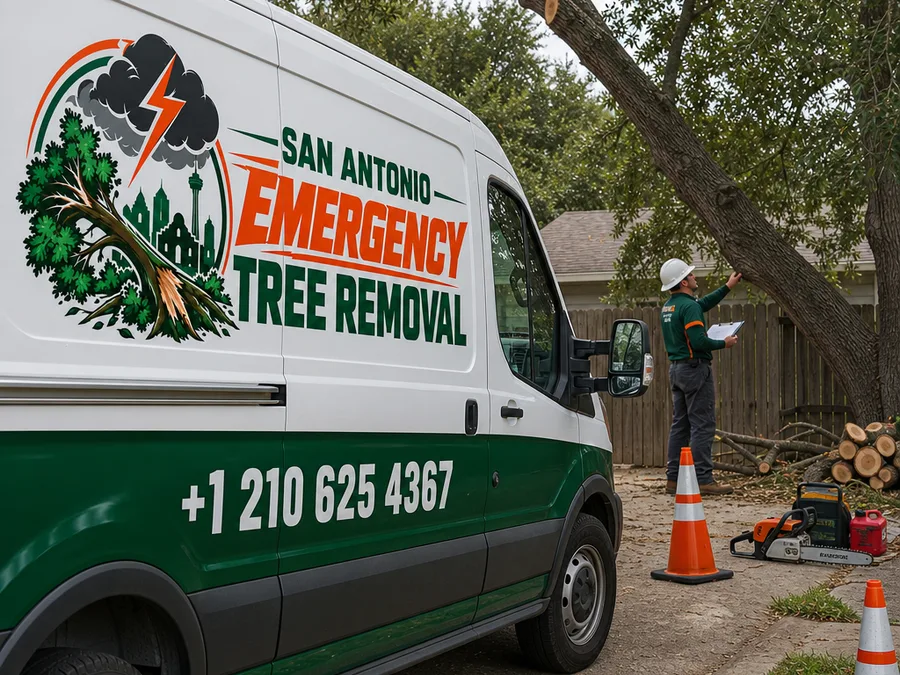
“After the storm our tree was leaning toward the house and we could hear cracking. The crew explained the plan, sectioned it down carefully, and cleaned up the yard so we could use the driveway again.”
Mia R.
“We had a big limb hung up in another tree and it was too risky to touch ourselves. They got it down safely and hauled everything off the same day.”
Carlos T.
Response time depends on current storm volume and access conditions, but urgent hazards like a split trunk, a tree on a structure, or a sudden lean are prioritized for rapid dispatch. The fastest way to get accurate timing is to share what the tree is contacting and whether access is clear for a crew and equipment.
Yes, in many cases a leaning tree can be removed safely by taking it down in sections and lowering pieces away from targets. The right method depends on the lean angle, trunk condition, and available drop zone, which is why the cutting plan is set after an on-site look.
If a tree is touching lines or appears entangled, treat it as a life-safety hazard and keep people back. Work near energized lines requires extra precautions and may require coordination for safety; the correct approach is determined on site based on the exact clearance and contact.
Cleanup is based on the written scope, but it typically includes cutting limbs and trunk into manageable sections, loading and hauling debris if selected, and raking or blowing the work area. If you prefer wood rounds left for firewood or stacked in a specific spot, that can be discussed before cutting begins.
Pricing is mainly driven by tree size, complexity—simple felling versus sectional takedown—hazards like storm splits, and access for equipment and debris removal. A quick on-site assessment lets us confirm whether rigging, climbing, or additional labor is needed and give a clear, written scope.
Storm-damaged trees are unpredictable because limbs and trunks can be under heavy tension, and the tree can shift when a cut releases pressure. If the tree is leaning, cracked, partially uprooted, or suspended on another tree, it is safer to have a trained crew evaluate and cut it with a controlled plan.
Tell us what is happening on your property in San Antonio, and we will confirm the safest cutting plan, the cleanup scope, and a clear price before work starts.