Hazard-focused pruning
We prioritize what can actually fail: cracked limbs, deadwood, over-extended laterals, and branches with poor attachment angles.
Serving San Antonio, Texas & surrounding areas
24/7 Emergency Response
Protect your home and property with precise pruning, hazard reduction, and fast response after storms. Insured crews handle the climb, the cuts, and the cleanup across San Antonio.
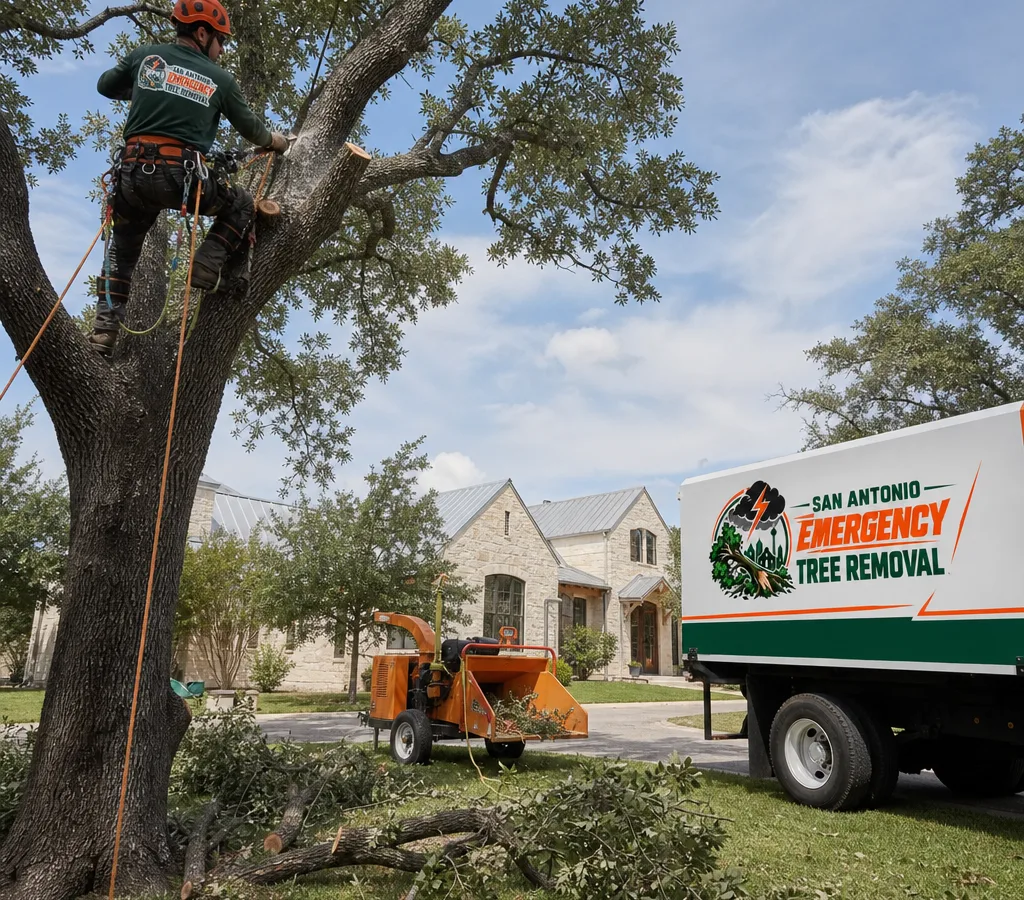
If you are searching for a tree trimming service San Antonio homeowners can rely on, you are usually trying to solve one of two problems: an immediate safety concern—hanging limbs, cracked unions, or storm damage—or a long-term maintenance need such as clearance over a roof, driveway, fence, or power lines.
At San Antonio Emergency Tree Removal, our trimming work is built around arborist best practices: prune for structure, remove deadwood, reduce weight where a limb is over-extended, and maintain clearance without stressing the tree. The goal is a healthier canopy that is less likely to drop limbs in high wind and a property that stays protected.
San Antonio gets intense heat and sudden storms, so trees can grow fast and also fail fast when defects go unnoticed. A proper trim is not a “top it and go” job. It requires careful cuts at the right points, a plan for lowering wood, and cleanup that leaves the site tidy.
A professional trim starts with a quick assessment of the tree’s structure: dead limbs, rubbing branches, weak unions, and clearance conflicts. Then we choose the right pruning approach for the species and the objective.
Common, appropriate trimming scopes include:
What to avoid: topping. Topping strips the canopy indiscriminately and often leads to weak, fast regrowth and higher failure risk later.
If your situation is primarily a downed tree or a tree that cannot be safely stabilized with pruning, tree removal service may be more appropriate than continued trimming. We will be direct about what is realistic once we see the tree.
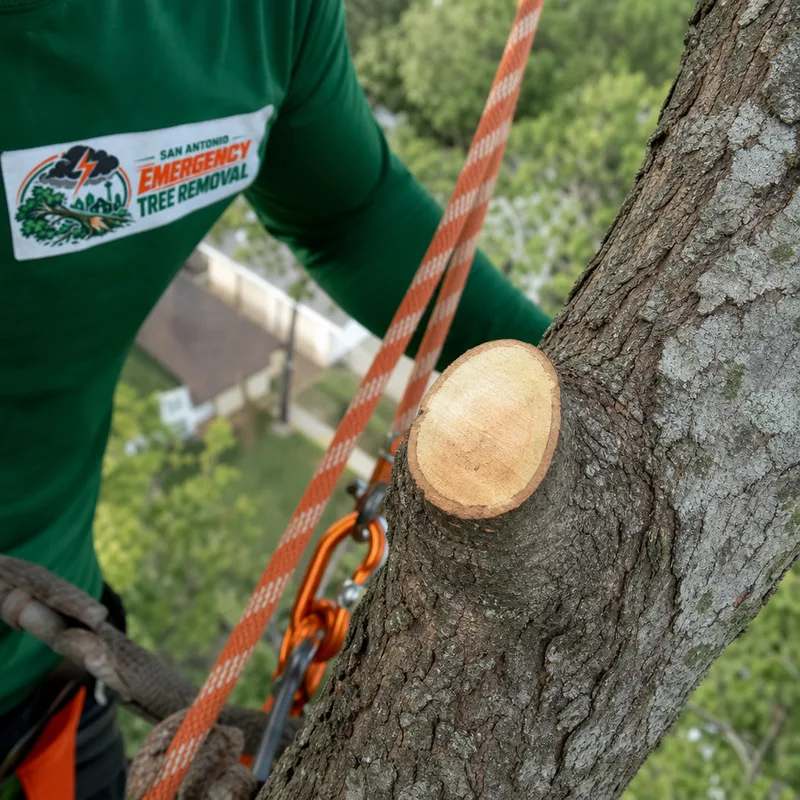
We prioritize what can actually fail: cracked limbs, deadwood, over-extended laterals, and branches with poor attachment angles.
Trimming is planned around real property conflicts, including branches over shingles, gutters, vehicles, and access points.
After high wind, trimming often means removing hangers and reducing weight on compromised limbs before they drop.
When there is limited drop-zone space, we lower limbs with ropes to protect fences, landscaping, and neighboring structures.
Brush and wood are gathered, chipped or hauled, and the work area is left orderly so you are not stuck with the mess.
Tree work involves heights, heavy wood, and cutting tools. We operate with jobsite safety and proper protective gear as the baseline.
San Antonio yards vary a lot, and that changes how trimming should be approached.
In Alamo Heights, many homes have established shade trees close to roofs and landscaped beds, so controlled lowering and careful cleanup matter as much as the pruning plan.
In Stone Oak, larger lots and taller canopies can mean more climbing and rigging time, especially when branches extend over outdoor living areas or long driveways.
Downtown and near Midtown, tight access and nearby structures often require sectional cutting and precise drop-zone planning because there is less room to safely lay down wood.
In Live Oak, and other areas with smaller backyards and shared fence lines, trimming often centers on clearance and preventing limb contact with structures, with extra attention to protecting neighboring property.
No matter where you are, the first step is the same: identify the limbs that present risk, then make the fewest cuts needed to accomplish the goal without over-pruning.
We look for deadwood, cracks, weak unions, and clearance issues. You get a clear plan for what will be trimmed and why, plus how debris will be handled.
We establish the drop zone, set climbing lines and rigging as needed, and stage equipment so wood can be lowered without damaging structures or landscaping.
We remove targeted limbs, reduce leverage over hazards, and shape the canopy conservatively. Cuts are made to encourage proper healing and reduce future defects.
Brush is chipped or stacked per your preference, larger wood is managed safely, and the area is raked and cleared so your property is usable right away.
Tree trimming in San Antonio typically ranges from about $250 to $1,200+ per tree, with small maintenance trims often on the lower end and large, high-risk or hard-to-access trees on the upper end. A simple clearance trim over a roofline is usually less than a full crown reduction with rigging.
Final pricing depends on tree size and species, how close it is to structures, the amount of deadwood, climb complexity, haul-off needs, and whether storm damage creates urgent hazards. The exact cost is confirmed after an on-site assessment of the tree and access.
If a limb is hanging, split, or rubbing a roofline, it is worth getting it assessed before the next storm turns it into a claim. Tell us what you are seeing and we will outline the safest trimming plan and cleanup approach.
Call for a Free EstimateFor urgent hazards like hanging limbs or branches resting on a roof, we prioritize scheduling as quickly as possible because the risk can change with the next wind gust. Share what is damaged, whether access is blocked, and whether any limbs are contacting structures so the crew can arrive prepared with the right rigging plan.
If branches are close to energized utility lines, the safest next step is an on-site evaluation to determine required clearance and who should perform the work. Many situations require coordination with the utility provider or specialized line-clearance methods, so do not attempt to cut or pull limbs off lines yourself.
Proper trimming should not harm a healthy tree when cuts are selective and not excessive; it can improve structure and reduce failure risk. Problems usually come from over-pruning, topping, or making improper cuts, which can trigger weak regrowth and stress the tree.
Many routine trims can be done year-round, but timing depends on the tree species, current health, and whether the work is safety-related. Hazard trimming for dead or broken limbs should be done as soon as practical, while elective shaping is often scheduled when it will place the least stress on the tree.
Yes, cleanup and debris removal can be included so you are not left with piles of brush. If you want to keep firewood-sized sections, mention it during the assessment so the crew can cut and stack it in a spot that makes sense for your property.
Trimming is usually appropriate when the tree is fundamentally stable but has localized problems like deadwood, clearance conflicts, or an over-extended limb. Removal is more likely when the trunk or main structure is compromised, the lean is worsening, or defects cannot be mitigated with pruning; an on-site assessment is the only reliable way to decide safely.
Send a few details about the tree, what it is overhanging, and any recent storm damage. San Antonio Emergency Tree Removal will confirm a safe scope, explain what will be cut and why, and handle cleanup so your property is protected.