Tree risk checks and written recommendations
Assessment of defects, lean, root plate disturbance, and targets, with a clear plan for pruning, monitoring, support, or removal.
Serving San Antonio, Texas & surrounding areas
24/7 Emergency Response
Get clear answers on tree risk, trimming, and removals from a crew that works safely around homes, tight access, and storm damage throughout San Antonio.
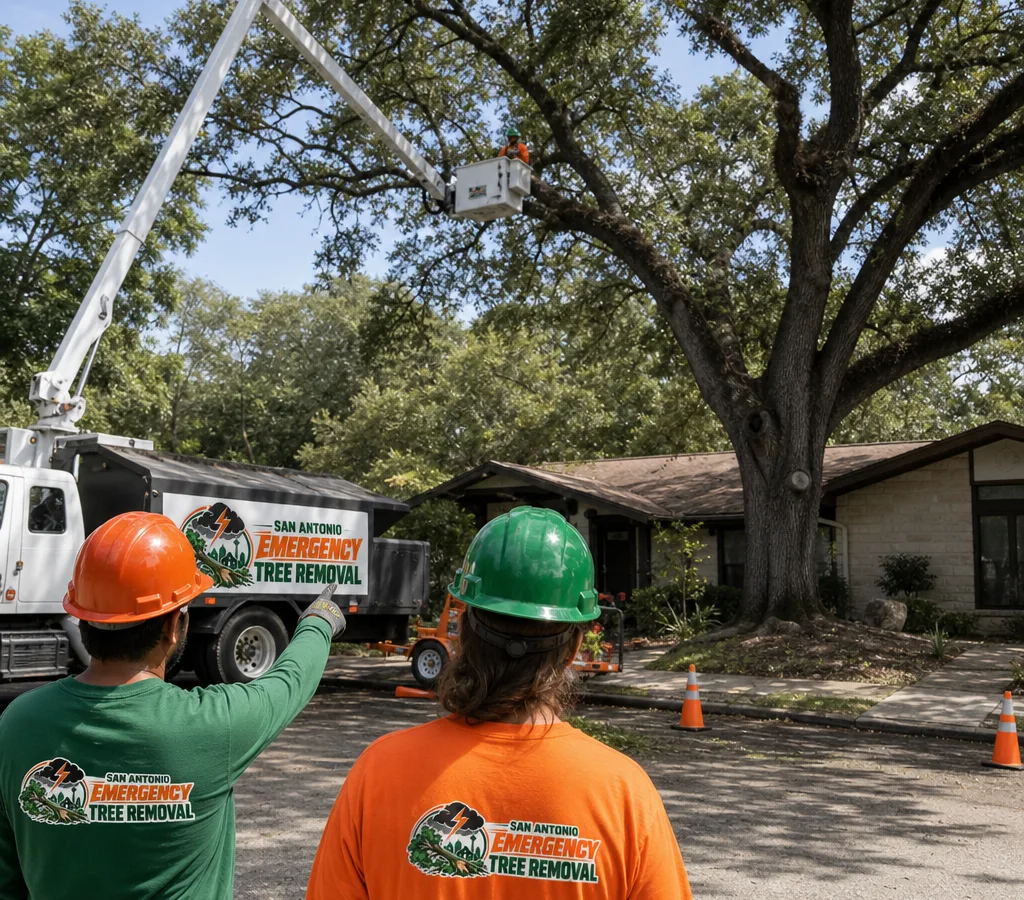
If you are searching for arborists in San Antonio, you are usually trying to solve one of three problems: a tree looks unsafe, a limb is threatening the roof or service drop, or you want a plan to keep mature trees healthy without over-trimming.
A professional arborist visit should start with an on-site look at the whole tree and its targets—rooflines, fences, driveways, neighboring property, and sidewalks. From there, you should get a plain-language recommendation: what can be pruned, what needs support, what should be monitored, and when removal is the safer option.
San Antonio’s weather swings matter. Heat stress, drought, and sudden storm winds can turn a minor defect into a major failure, especially on large, mature shade trees. A good arborist will discuss the tree’s structure, visible defects, and site conditions such as grade changes, recent trenching, or vehicle compaction.
If you also need fast hazard removal, the same crew can often coordinate the work with dedicated equipment and rigging. When a tree is already beyond saving or actively threatening a structure, removal may be the safer recommendation.
Assessment of defects, lean, root plate disturbance, and targets, with a clear plan for pruning, monitoring, support, or removal.
Removal of dead, broken, and hanging limbs to reduce drop hazards over driveways, patios, and play areas.
Selective cuts to improve spacing and reduce weak unions while keeping the canopy balanced and healthy.
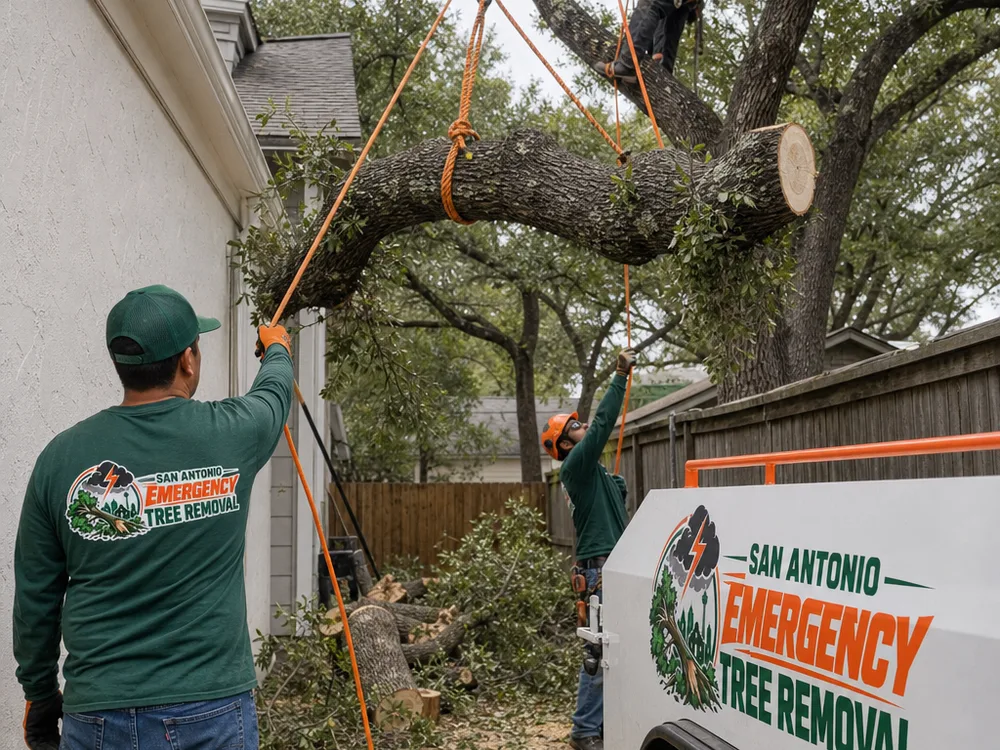
Safe removal of compromised limbs, partial failures, and split leaders, with controlled lowering to protect roofs and fences.
Sectional removal with rigging when the tree is dead, severely declined, or structurally unsafe, including cleanup and haul-off.
Care instructions after pruning or storm work, including what to watch for and when to re-check the tree.
Tree work is never one-size-fits-all, and in San Antonio the site often dictates the safest method.
In Alamo Heights and Terrell Hills, mature trees can be close to structures and property lines, so sectional dismantling and careful lowering are common when removals are needed.
In Stone Oak, many properties have large canopies over long driveways and multi-level rooflines. Access and drop zones can be limited, so the pruning plan often emphasizes controlled rigging and staged debris handling.
In older neighborhoods like Monte Vista, established street trees can have decades of prior pruning. An arborist looks for old wound closure, included bark at tight unions, and cavities that affect what can be safely reduced.
Around Downtown and the Pearl area, tighter lots, parked cars, and pedestrian traffic make traffic control, spotters, and clean work zones part of the job from the first cut to final haul-off.
Where overhead utilities are involved, the plan must prioritize clearances and safety. If a limb is contacting a power line, keep everyone away and get the hazard evaluated before any cutting begins.
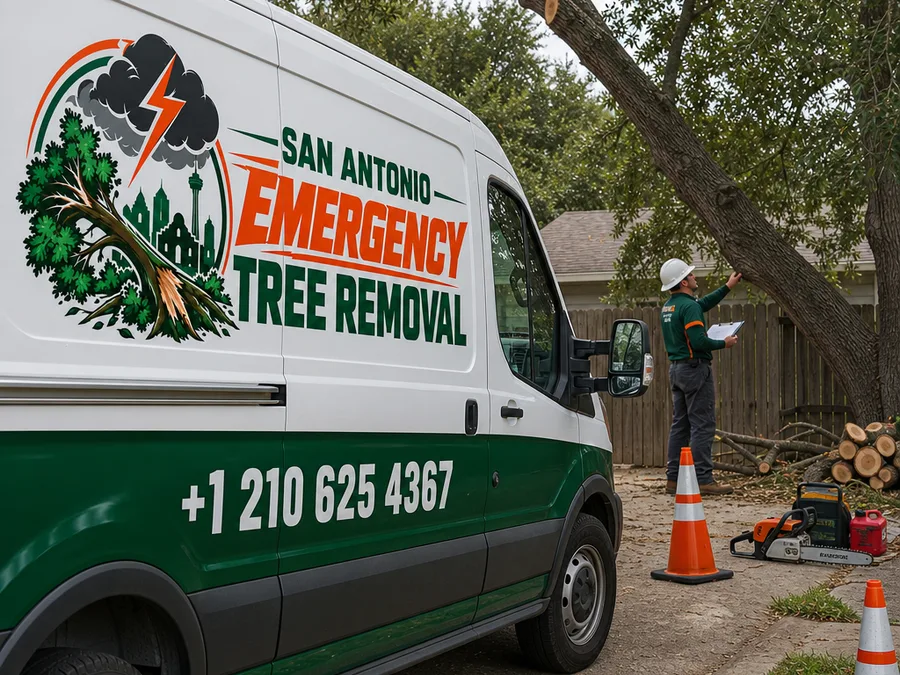
We inspect the canopy, trunk, and root flare, then identify targets and access constraints like gates, slopes, or fragile landscaping.
You get a clear explanation of what we recommend and why, including what we will remove, what we will keep, and how we will protect nearby structures.
We stage equipment, establish drop zones, and set ropes and rigging points when needed for controlled lowering.
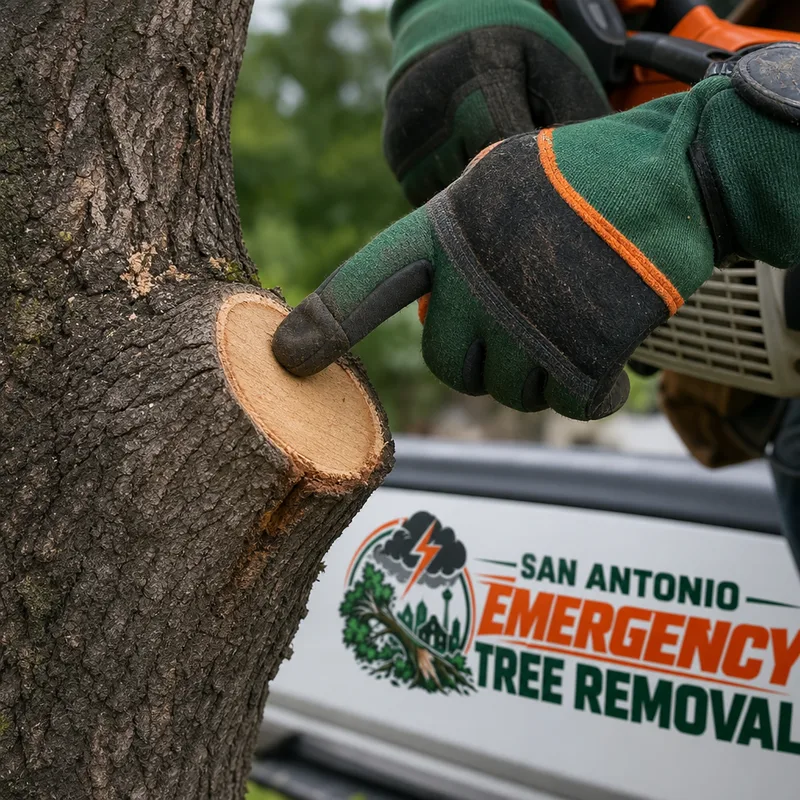
Cuts are made deliberately for tree health and safety. For removals, we dismantle in sections when space is limited.
Brush is chipped or hauled, wood is stacked or removed as agreed, and the work area is raked and cleared.
Arborist work in San Antonio typically ranges from about $150 to $500 for a basic assessment or small pruning job, while larger pruning or complex removals commonly run $600 to $2,500+, depending on tree size and access. High-risk removals near structures or with heavy rigging can exceed that.
Price changes with height and trunk diameter, canopy density, proximity to roofs or lines, gate width, haul-off needs, and whether storm damage adds instability. The exact cost is confirmed after an on-site inspection so the method and safety plan match the property.
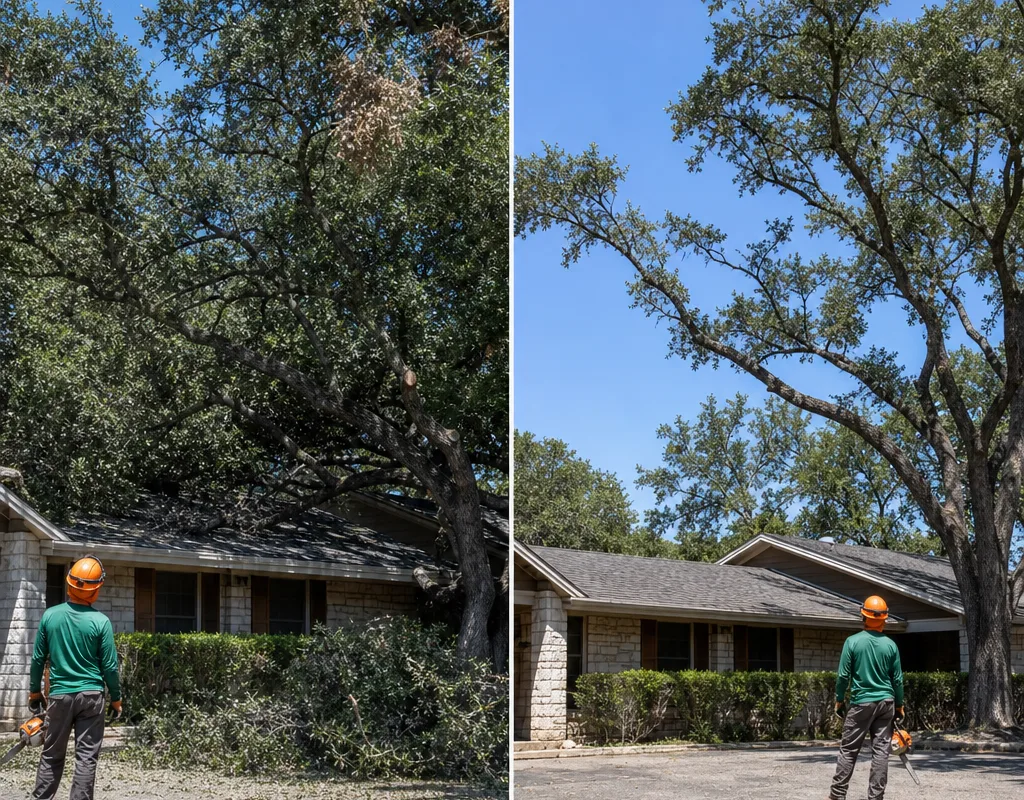
“After a storm we had a split leader hanging over the driveway. The crew explained what was stable, what wasn't, and lowered everything safely without tearing up the yard.”
Megan R.
“We wanted to keep our big shade tree but it needed real structure work. The arborist showed us which limbs were the problem and the pruning made the canopy look balanced again.”
Carlos V.
If you are worried about safety, tree health, or liability, you want an arborist involved. Signs include new lean, cracks, cavities, dead upper canopy, multiple heavy limbs over the roof, root disturbance from recent digging, or storm-split unions. Routine clearance pruning may be straightforward, but risk calls for an assessment and a defined pruning or removal plan.
Some storm-damaged trees can be saved if the main trunk and primary scaffold structure are intact and the remaining canopy can be reduced without over-thinning. Removal is more likely when the trunk is split, the tree has a major root plate lift, or the failure involves a primary union that cannot be corrected with pruning. An on-site evaluation is the only safe way to decide, because hidden cracks and compromised attachments are common after wind events.
Professional pruning should include a goal—clearance, risk reduction, structure, or health—specific limbs or percentages discussed before cutting, and a cleanup plan. Expect targeted cuts such as deadwood removal, crown raising, and selective reduction rather than topping. If the work is near structures, the crew should describe how limbs will be lowered and how the drop zone will be protected.
Yes, tight access is common in San Antonio, and it changes the method. Instead of free-dropping wood, we use sectional dismantling, rigging, and controlled lowering to keep material off the roof, HVAC units, and neighboring fences. During the estimate we look at gate width, slope, staging space, and where debris can be moved safely.
For urgent hazards like hanging limbs or a tree that has partially failed, we prioritize quick scheduling based on risk and site conditions. When you reach out, share what changed—storm damage, a new crack, or sudden lean—what it is threatening, and whether access is clear for trucks and equipment so we can plan the safest response.
Haul-off is typically available and is priced based on volume, handling, and access. Some customers prefer to keep larger rounds for firewood or to have brush chipped for mulch, while others want full removal. Confirming this during the scope is important because it affects time on site, truck needs, and where debris can be staged without blocking driveways.
Tell us what you are seeing and where the tree sits on the property. San Antonio Emergency Tree Removal will schedule an on-site look and give you a clear scope for pruning, risk reduction, or removal based on what is safest for the tree and your home.