Below-grade grinding for a flat finish
We grind the stump down below the surrounding soil line so you can top-dress with soil and move forward with grass or landscaping.
Serving San Antonio, Texas & surrounding areas
24/7 Emergency Response
Get rid of trip hazards, pests, and ugly remnants after tree work or storm damage. We grind stumps below grade, haul debris if requested, and leave your yard ready for soil and grass.
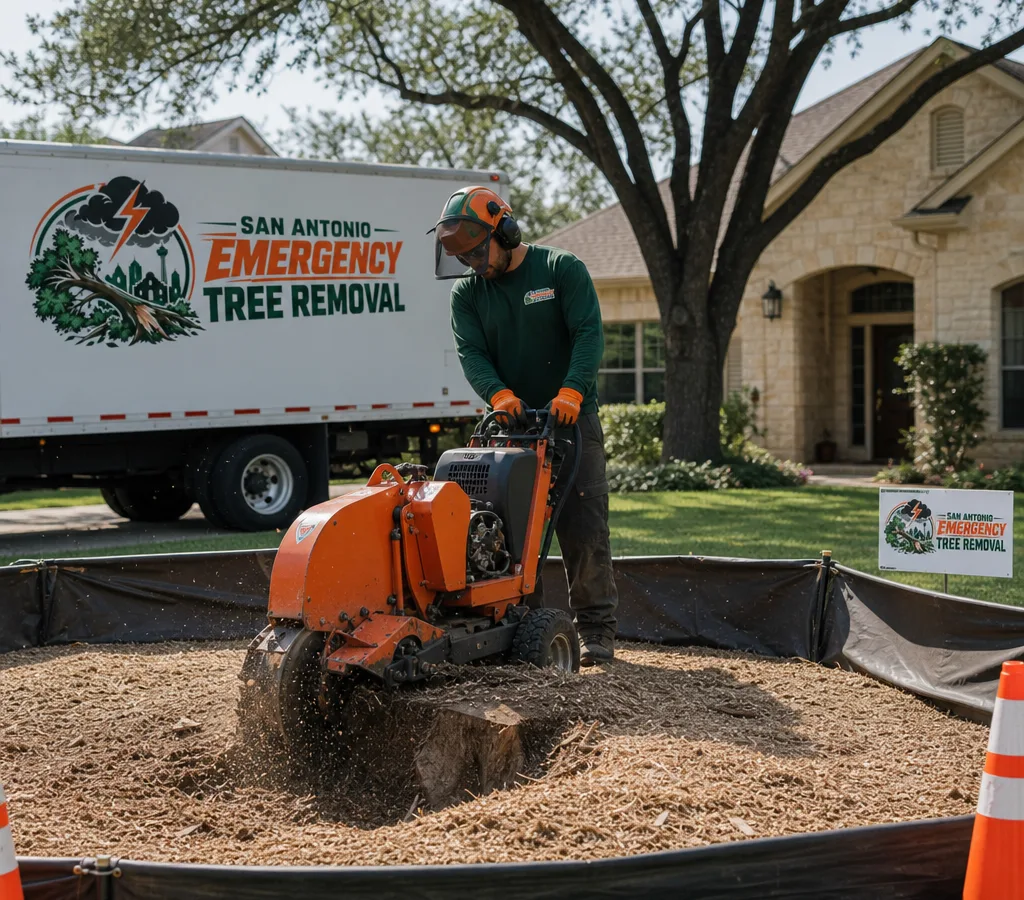
If you are searching for stump grinding San Antonio homeowners can schedule quickly, the goal is simple: remove the stump without tearing up the rest of the yard. Grinding is the standard method because it eliminates the above-ground stump and reduces the root flare to wood chips, typically 6 to 12 inches below grade—deeper on request when practical.
San Antonio Emergency Tree Removal handles residential stump grinding for single stumps and multi-stump cleanups. You get a clear plan for access, chip control, and how the area will be left when we are done. If the stump is tight to a fence line, near hardscape, or close to irrigation, we talk through the approach before equipment ever rolls onto the turf.
Stumps do more than look bad. They create mower obstacles, hold moisture that attracts insects, and can become a tripping point in side yards. For many properties, grinding is the fastest way to make the area usable again for sod, a planter bed, or just a clean, flat lawn.
We grind the stump down below the surrounding soil line so you can top-dress with soil and move forward with grass or landscaping.
Gate width, tight corners, and soft lawns all affect equipment choice and route. We plan entry and exit to reduce rutting and avoid unnecessary damage.
Grinding creates a lot of chips. We can leave chips for reuse, move them to a designated area, or haul them away depending on your preference and scope.
Stumps near structures and lines require a controlled approach. We discuss setbacks and what can be safely ground before we start.
When wind and heavy rain leave multiple properties with downed limbs and stumps, we prioritize safe cleanup and quick turnaround for affected yards.
After a storm, you often end up with a cut stump that is too tall to mow and too heavy to remove by hand. Stump grinding is typically faster and less disruptive than full stump excavation because it avoids pulling a large root ball and bringing up a wide crater.
This matters in neighborhoods with smaller lot lines and tight access, where keeping equipment contained and protecting fences and gates is part of the job. In places like Alamo Heights, where yards can be compact and landscaping is close to the work area, a measured grind with chip control usually protects surrounding plants better than aggressive digging.
In Stone Oak, where many homes have irrigation and landscaped beds, planning the grinder path and the final grade helps you restore the area without reworking half the yard.
If you are also dealing with a fallen or hazardous tree, start with a safe removal plan and then schedule the grind as the final cleanup step. Many clients begin by arranging a tree removal service and then finish the yard restoration with stump grinding once the trunk and limbs are off-site.
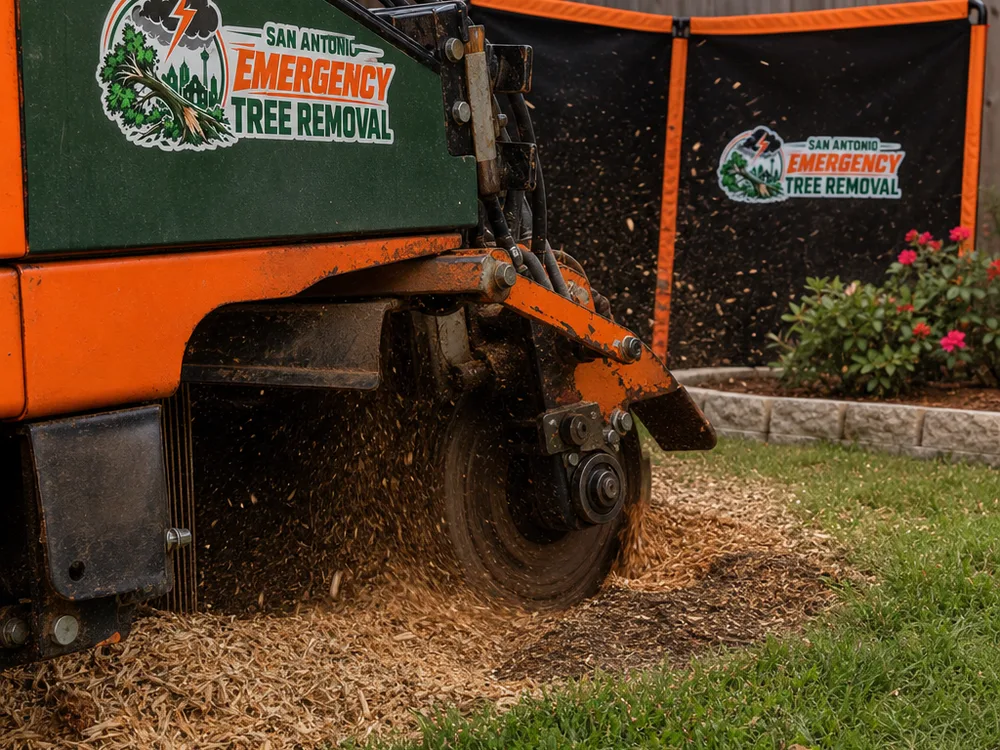
We confirm stump location, gate widths, terrain, and nearby obstacles like fences, patios, and sprinkler heads. If there are visible utility markers, we plan around them.
We position the grinder, manage where chips will go, and establish a safe perimeter. This is especially important in front yards and side yards with foot traffic.
We work the stump down below grade. For shallow turf restoration, 6 to 12 inches is common; deeper can be requested for certain landscaping needs if access and conditions allow.
We level the grindings and surrounding soil line. You can keep chips for mulch, or we can remove them based on the agreed scope.
We tell you what is left in the hole, how to top with soil, and when it is reasonable to seed or lay sod so the spot does not dip later.
Stump grinding in San Antonio typically ranges from about $150 to $600 per stump, with small, accessible stumps at the low end and large diameter stumps or difficult access at the high end. Multi-stump jobs are often priced as a package when the equipment is already on site.
Your exact price depends on stump diameter measured at ground level, wood hardness, the number of stumps, access through gates, slope, proximity to fences or hardscape, and whether you want chips hauled away. Final cost is confirmed after an on-site look at the stump and access conditions.
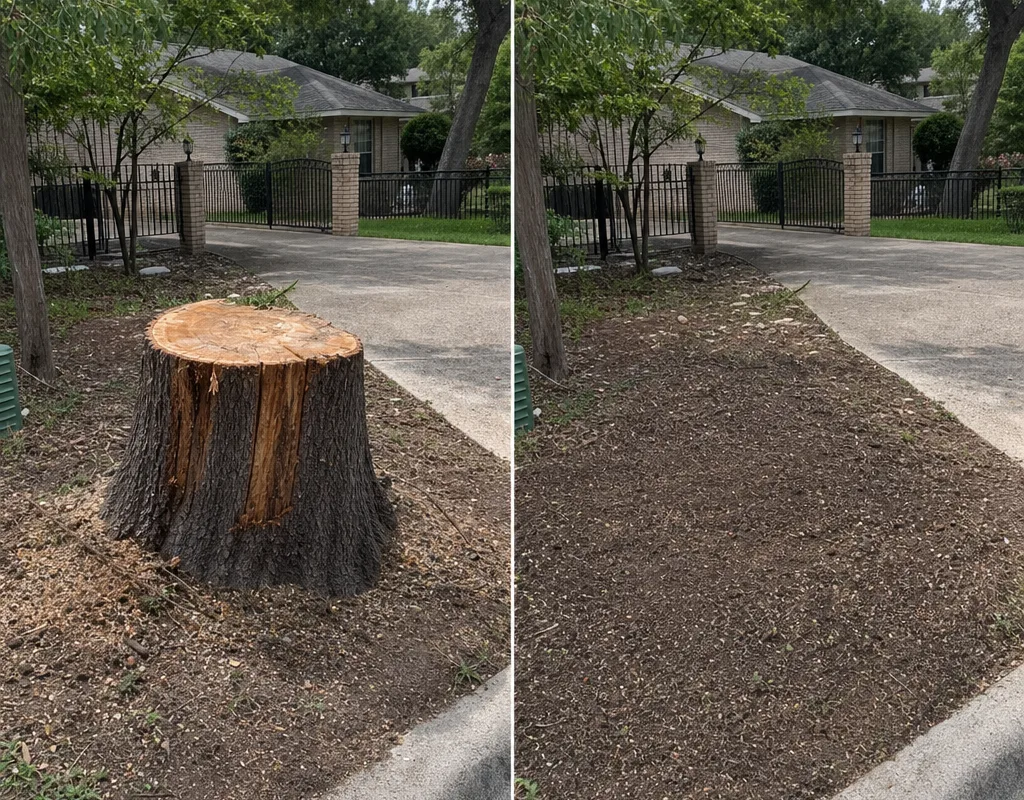
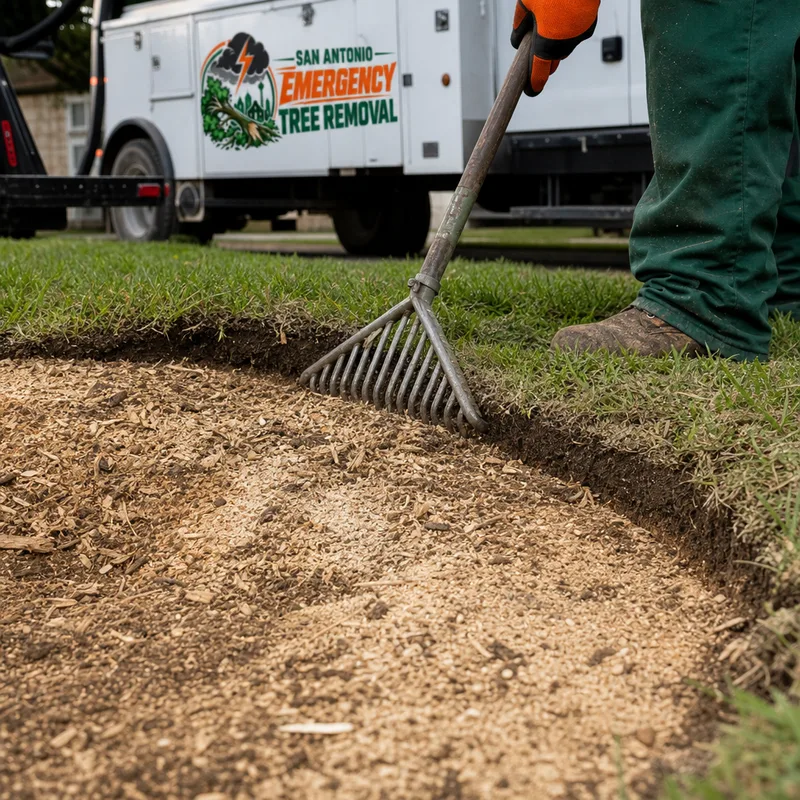
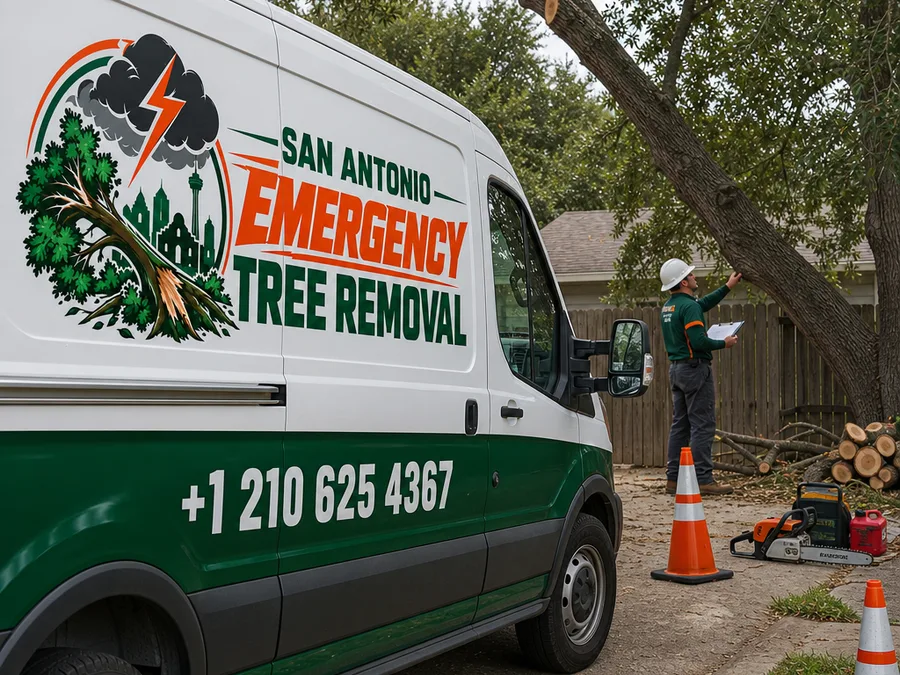
Most stump grinding is done about 6 to 12 inches below grade, which is enough for soil and grass in many yards. If you are planning a planter, pavers, or deeper regrading, request a deeper grind and we will confirm what is practical based on access, stump size, and nearby obstacles.
Grinding removes the stump and root flare near the surface, but it does not remove every root running out into the yard. Large roots deeper in the soil typically decompose over time; if a specific surface root is creating a trip hazard, we can discuss targeted grinding where accessible.
If the stump is near areas where lines may run, marking is a smart step before grinding. Even when a stump looks isolated, irrigation, lighting, and other private lines can be nearby, so we plan carefully and may ask you to identify any known private line routes.
You can keep the chips for mulch, have them moved to a designated area, or include hauling as part of the job. Chips will settle over time, so if you are restoring lawn, plan to add topsoil after the grindings have had a chance to compact.
Often yes, but it depends on access, the stump diameter, and how close the hardscape is to the root flare. We use controlled positioning and chip management, and we will tell you upfront if a portion must remain to avoid damaging a fence, slab edge, or nearby landscaping.
You can usually add topsoil and seed or sod soon after grinding, but the spot may settle as chips decompose and compact. For the best finish, many homeowners top off the area, let it settle, then add more soil before final seeding or patching.
Tell us where the stump is located and what you want the finished area to look like. We will confirm access, grinding depth, chip handling, and scheduling, then provide a clear written scope for stump grinding in San Antonio.