Hazard-focused trimming
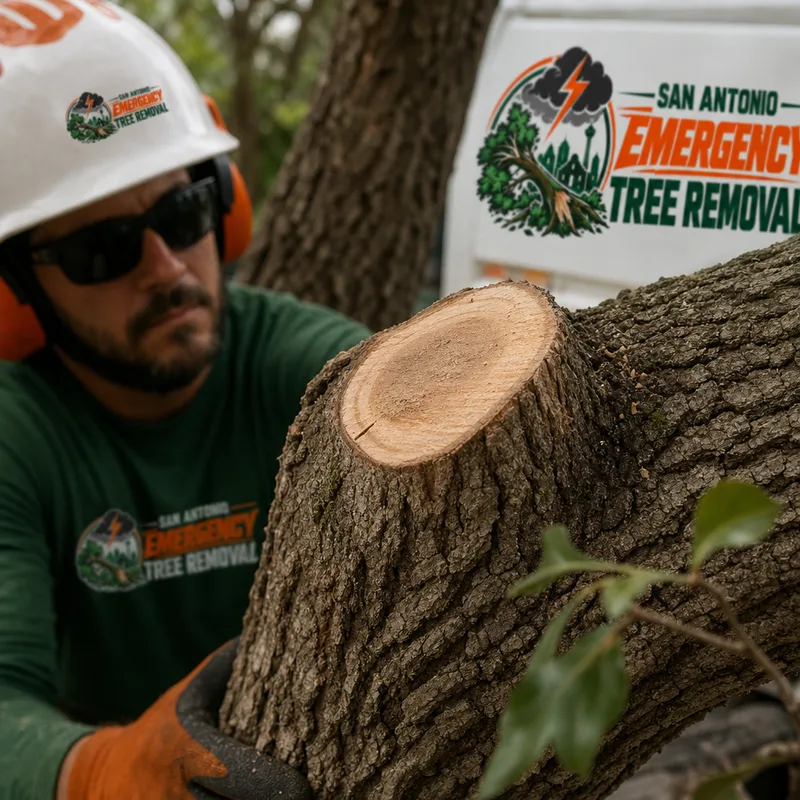
Deadwood removal, weight reduction, and clearance pruning to reduce the chance of limb failure over roofs, sidewalks, and driveways.
Serving San Antonio, Texas & surrounding areas
24/7 Emergency Response
Storm damage, hazardous limbs, and overgrown trees handled with a clear plan, safe cutting, and full haul-off and cleanup. Fast scheduling across San Antonio when a tree is blocking access or putting property at risk.
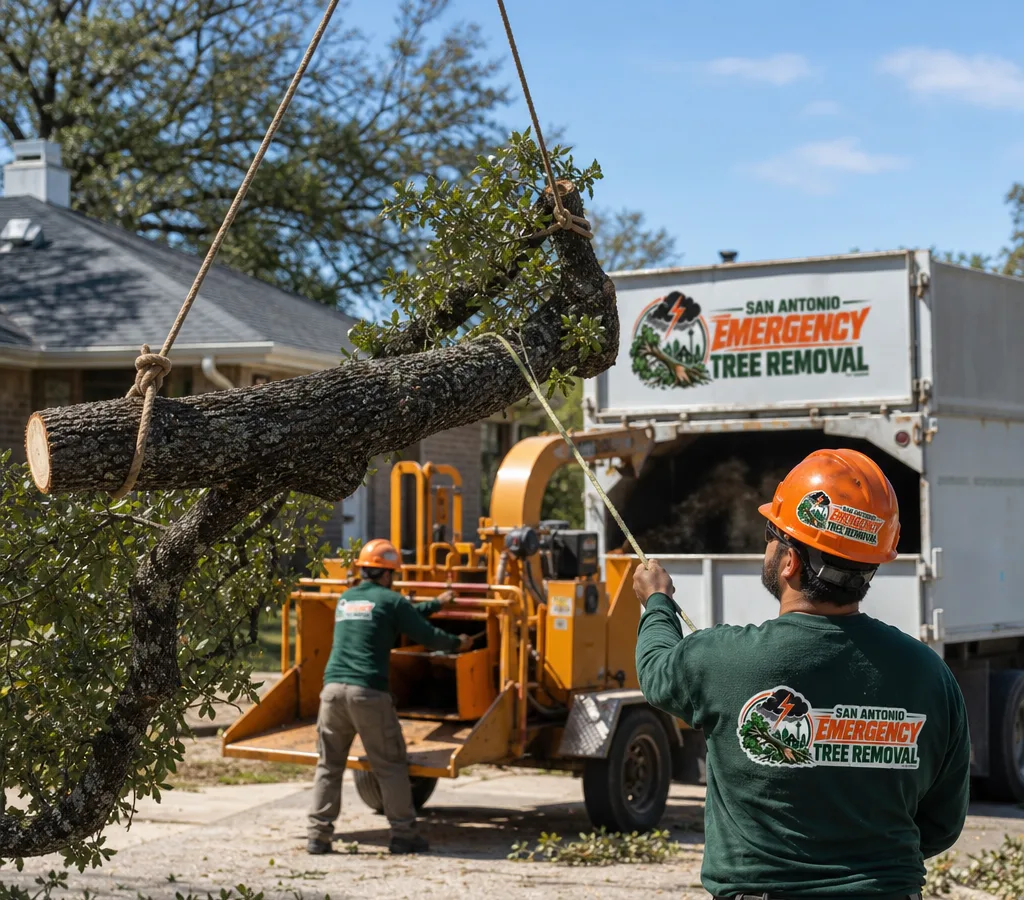
If you are searching for tree services san antonio tx, you are usually dealing with one of two situations: a tree problem that needs a plan—trimming, thinning, deadwood removal, or clearing a roofline—or a tree problem that needs immediate risk reduction, such as storm damage, split trunks, hanging limbs, or blocked driveways. Our crew at San Antonio Emergency Tree Removal handles both with practical, safety-first work and a straightforward scope you can approve before cutting starts.
San Antonio weather can change fast. Strong thunderstorms and high winds can turn weak unions and deadwood into falling hazards, and saturated ground after heavy rain can make already-leaning trees unstable. If a tree is touching power lines, do not approach it. Keep people clear, and let the utility handle the line side before any cutting happens.
We work on residential and small commercial properties across the city, including older neighborhoods with mature canopy where limb weight and roof clearance matter, and newer areas where tight side yards and fenced lots require careful lowering and controlled drop zones.
Deadwood removal, weight reduction, and clearance pruning to reduce the chance of limb failure over roofs, sidewalks, and driveways.
Cutting and sectioning downed or partially failed trees, including complex situations where trunks are under tension or resting on structures.
Controlled lowering with ropes and rigging when there is limited drop space near homes, fences, sheds, and parked vehicles.
Brush, logs, and debris removal with jobsite cleanup so you are not left with piles at the curb or in the yard.
You get a written scope of work that spells out what is being cut, what is staying, and what is included for debris handling.
Priority scheduling when a tree is blocking access, damaging a roofline, or creating a clear safety hazard on the property.
Tree work is not one-size-fits-all. The right approach depends on species, structure, proximity to targets such as a roof, fence, or driveway, and whether the tree is stable. We commonly help with:
If your situation is specifically about taking a tree down, our tree removal service covers full removals, access planning, and cleanup options.
San Antonio examples we see often include mature trees close to homes in Alamo Heights, larger lots in Stone Oak where canopy can overhang driveways and walk paths, and established yards in Terrell Hills where careful lowering matters because drop zones are limited. Near Downtown and Southtown, street-side trees can be close to sidewalks and parked cars, which changes how pieces are lowered and staged for haul-off.
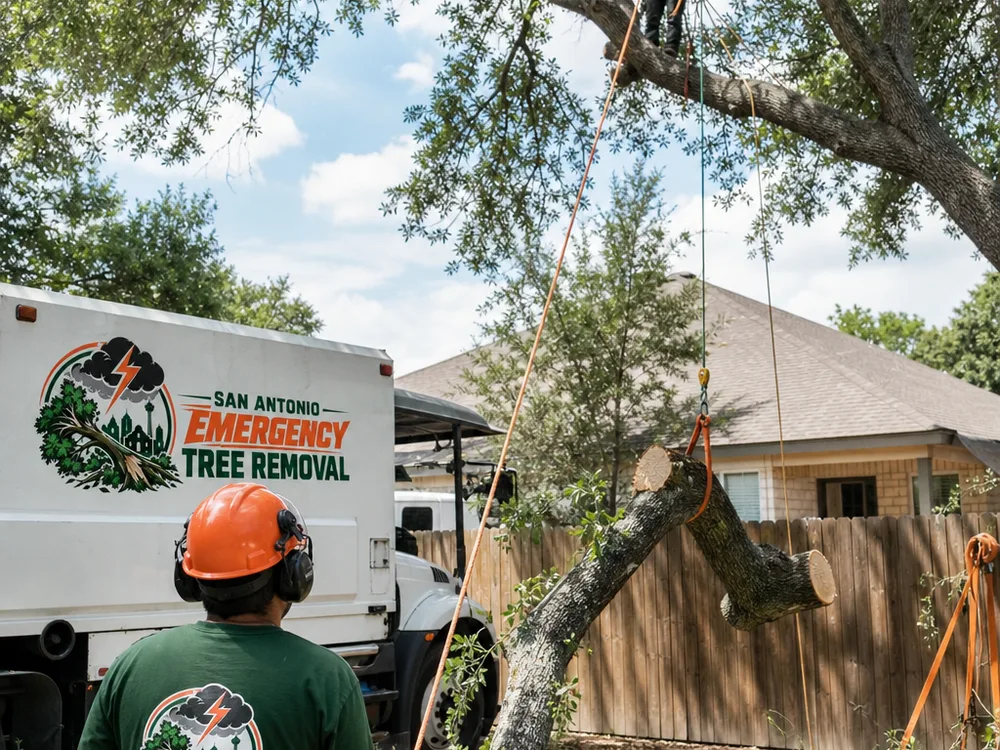
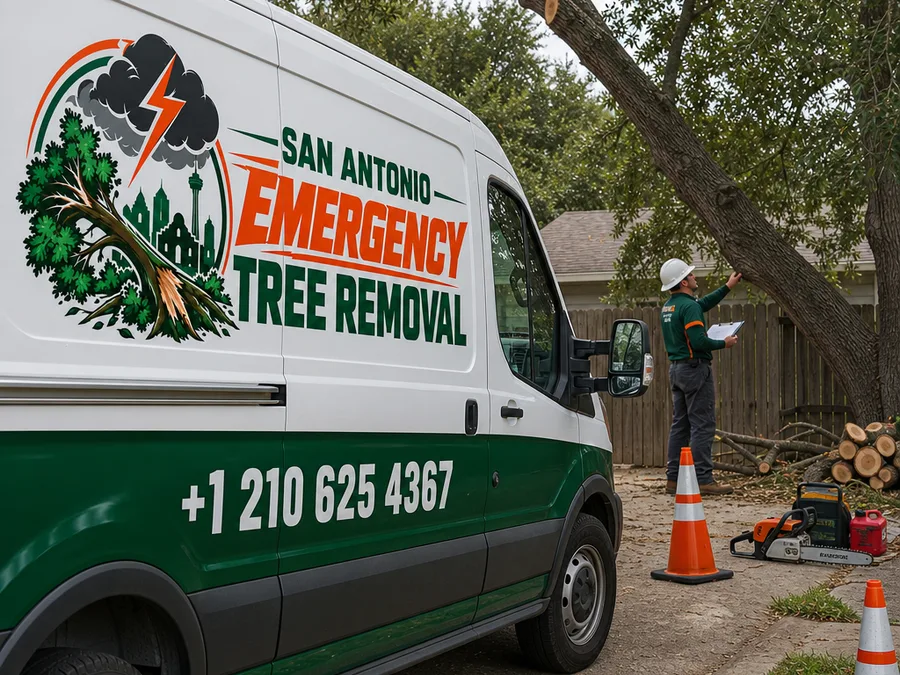
We look at tree condition, lean, defects, targets, and access. If there are overhead conductors involved, we plan around safe clearance and coordination steps.
You get a clear scope: which trees or limbs, the type of cuts—reduction, removal, or deadwood—what gets hauled, and what stays.
We set the work zone, use rigging where needed, and cut in manageable sections. Debris is staged to keep paths and driveways usable.
We load brush and logs, rake and blow the area as appropriate, and do a final walk-through so you know exactly what was completed.
Most tree services in San Antonio typically range from about $250 to $1,500+, depending on the size of the tree, the type of work—trimming versus removal—and how technical the job is. Small limb cuts and light pruning are often at the low end, while large removals, storm-damaged trees, or crane- and rigging-heavy jobs cost more.
Price changes most with tree height and trunk diameter, proximity to roofs and power lines, access for equipment such as gates, slopes, and tight side yards, and how much debris you want hauled off. The exact cost is confirmed after an on-site assessment of the tree and the work area.
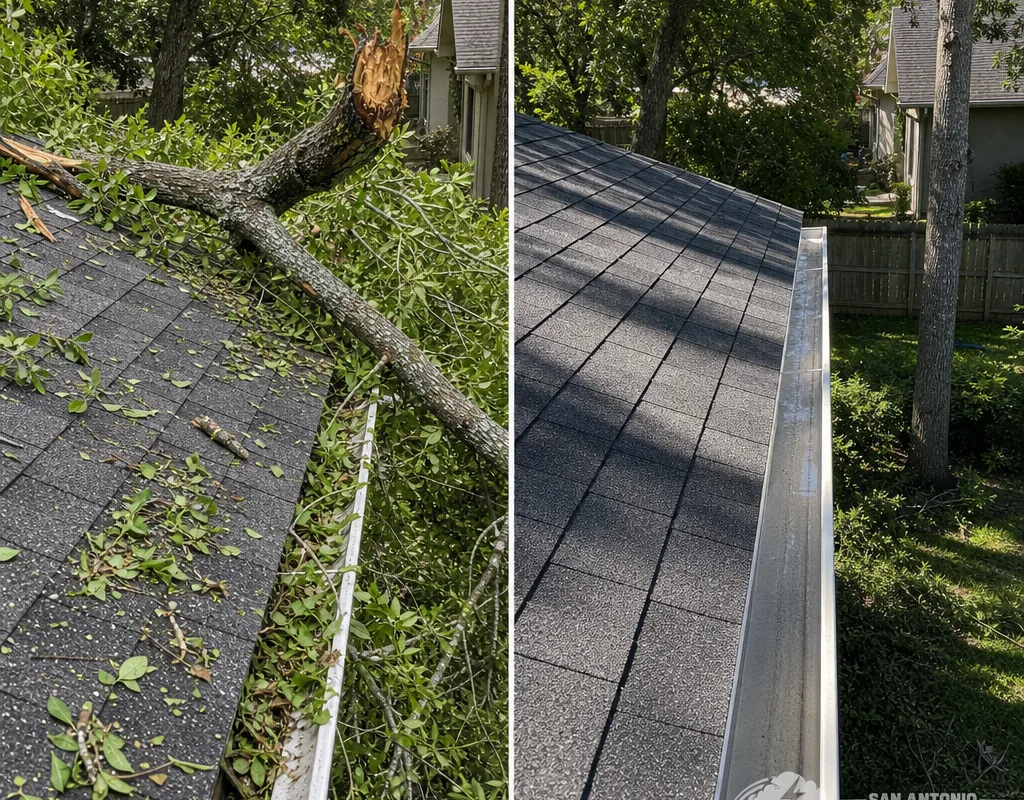
Yes, we prioritize same-day or next-day scheduling when a tree is blocking access, resting on a structure, or has hanging limbs that present a clear hazard. When you reach out, share what the tree is contacting—roof, fence, or driveway—and whether any lines are involved so we can plan the safest response.
Treat it as energized and keep everyone away from the area; do not try to cut or move it. Utility involvement comes first for anything contacting service lines, and tree cutting can start only after the line side is made safe.
Haul-off and cleanup can be included in the scope, and we will spell out what is being removed from the property before work begins. If you want to keep firewood rounds or mulch, that can usually be planned for, as long as there is a safe staging spot.
For practical purposes, most homeowners use trimming and pruning interchangeably, but the decision is based on structure and risk: deadwood removal, clearance over targets, and weight reduction on heavy limbs are common goals. We focus on cuts that reduce failure risk without stripping the canopy in a way that can stress the tree.
Often, yes, by climbing and rigging pieces down in sections rather than dropping them. Tight access affects cost and timeline because it changes how material is lowered, staged, and hauled off, especially in neighborhoods with narrow side setbacks.
We can cut trees down to stump height as part of removal, and we can discuss stump grinding if you need it for replanting or landscaping. Stump grinding depends on access and what is around the stump—rock edging, irrigation, and utilities—so it is best scoped during the visit.
We plan the drop zone, use ropes and rigging when there is no safe free-fall area, and cut sections to a size that can be controlled. Protecting targets like condensers and fence lines is a core part of the work plan, not an add-on.
Tell us what happened, what the tree is contacting, and what access you have to the work area. We will confirm a safe plan, a clear scope, and the cleanup details before any cutting starts.