Hazard-focused trimming
We target deadwood, cracked limbs, tight branch unions, and overextended growth that can fail in wind or under its own weight.
Serving San Antonio, Texas & surrounding areas
24/7 Emergency Response
Reduce storm risk, clear roofs and lines, and keep your trees healthy with careful cuts and clean-up by a safety-first crew.
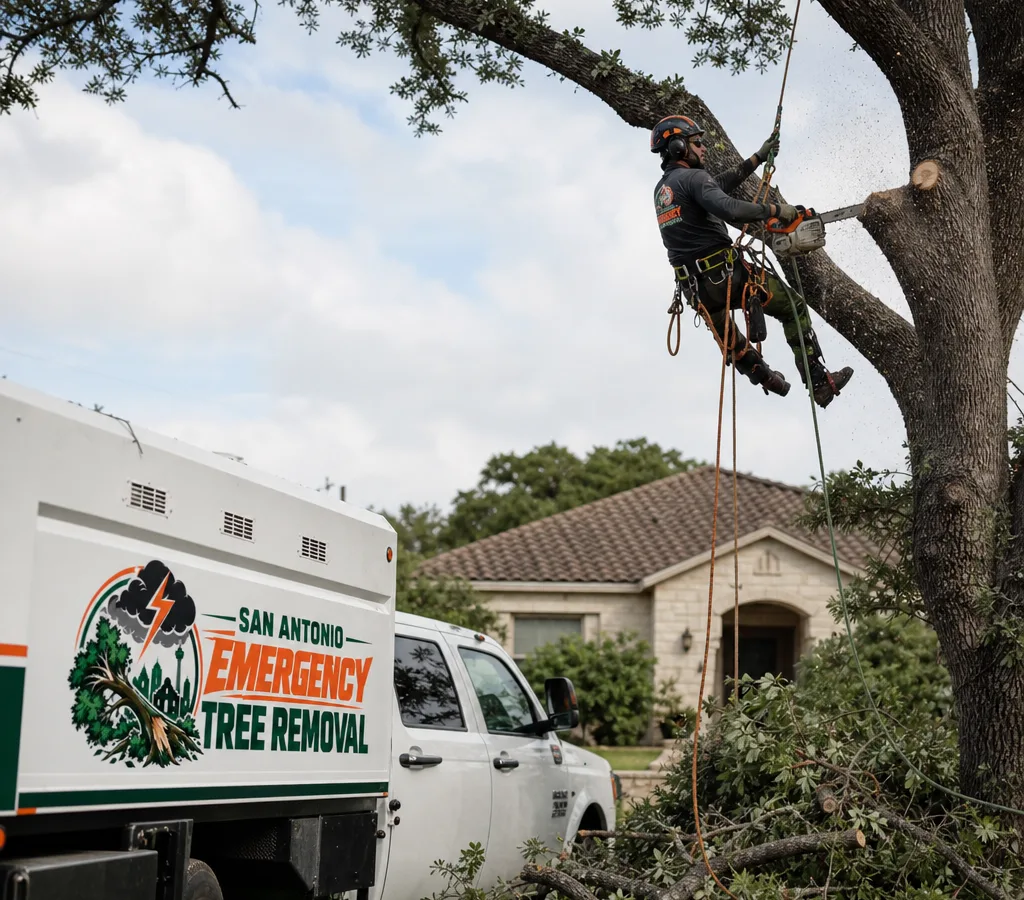
San Antonio tree pruning is part safety work and part plant care. The goal is simple: remove what does not belong—dead, broken, rubbing, and overextended limbs—while keeping the tree's structure strong enough for wind, rain, and fast growth.
In South Texas, trees can put on a lot of new growth quickly, creating long, heavy limbs over roofs, driveways, fences, and patios. When storms roll through, those limbs are often what fails first. Pruning also addresses branches scraping shingles, blocking walkway clearance, or growing into light paths.
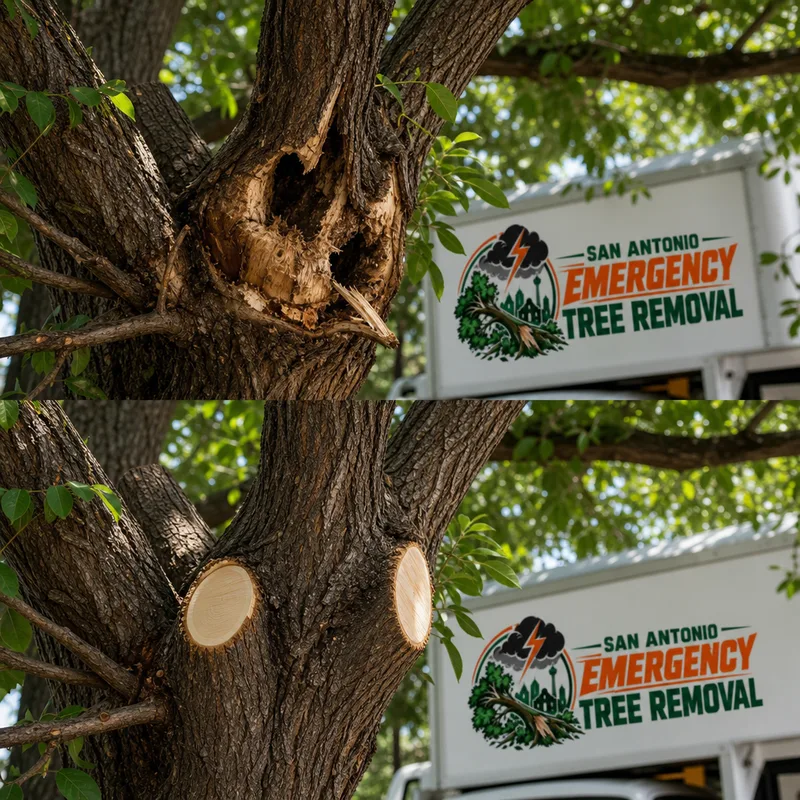
San Antonio Emergency Tree Removal emphasizes safe access, correct cuts at the branch collar, and practical outcomes: better clearance, less end-weight, fewer hazards over structures, and a canopy that still looks natural. If a tree is already dangerous or storm-failed, our Tree Removal Service is available when pruning is not enough.
We target deadwood, cracked limbs, tight branch unions, and overextended growth that can fail in wind or under its own weight.
Pruning restores practical clearance so branches are not grinding on shingles, hanging into parking areas, or pushing against fencing.
Selective thinning reduces sail effect and limb weight without stripping the canopy or leaving a lion-tailed look.
We correct competing leaders and poorly spaced branches early so the tree grows with a stronger framework.
Brush and wood are staged safely, loaded efficiently, and removed so your yard is usable again right away.
Good pruning is not a haircut. It is a set of decisions about load, leverage, and the tree's future growth.
We start by walking the canopy and looking for deadwood, hangers, storm cracks, and limbs that rub and wound each other. Then we evaluate the targets below. A limb over a bedroom roof, driveway, or play area carries a different risk than one over open yard.
From there, we choose a cut plan that keeps the canopy balanced. That usually means reducing end-weight, removing poorly attached branches, and retaining strong laterals. We avoid topping because it drives weak regrowth and creates a cycle of breakage.
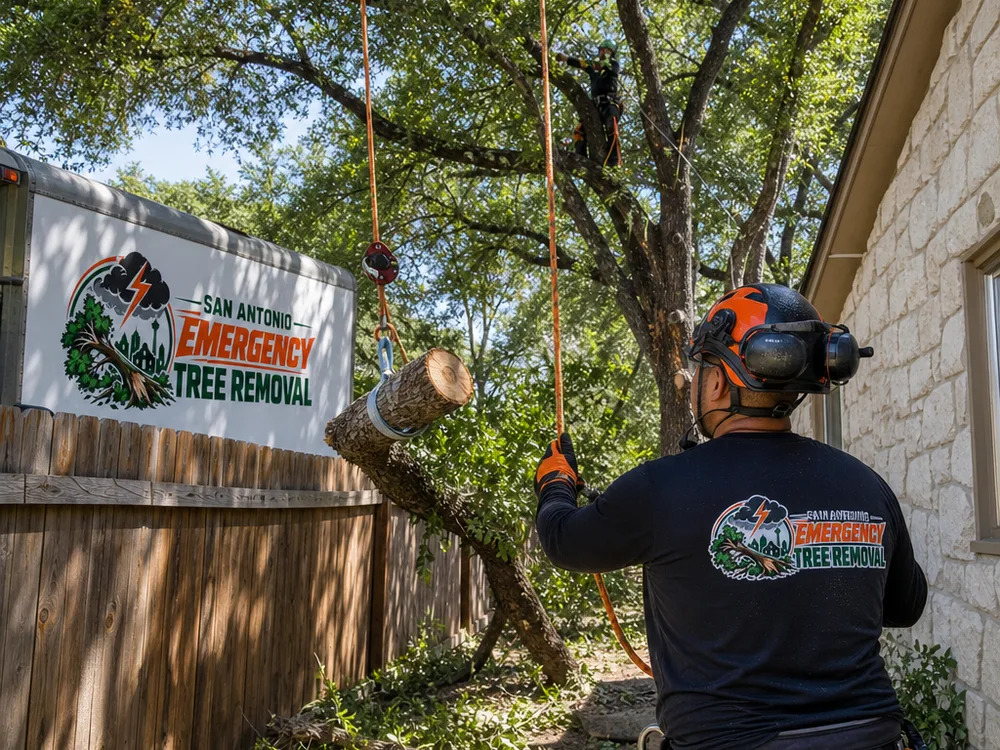
When pruning above homes, pool cages, and tight side yards, we use controlled rigging so pieces come down on our terms. In Alamo Heights and Terrell Hills, tight setbacks and mature trees make technical rigging and clean drop zones especially important.
If we see signs that the tree is failing at the trunk or root plate, we will tell you plainly. Some trees are not candidates for pruning, and removal then becomes the safer option.
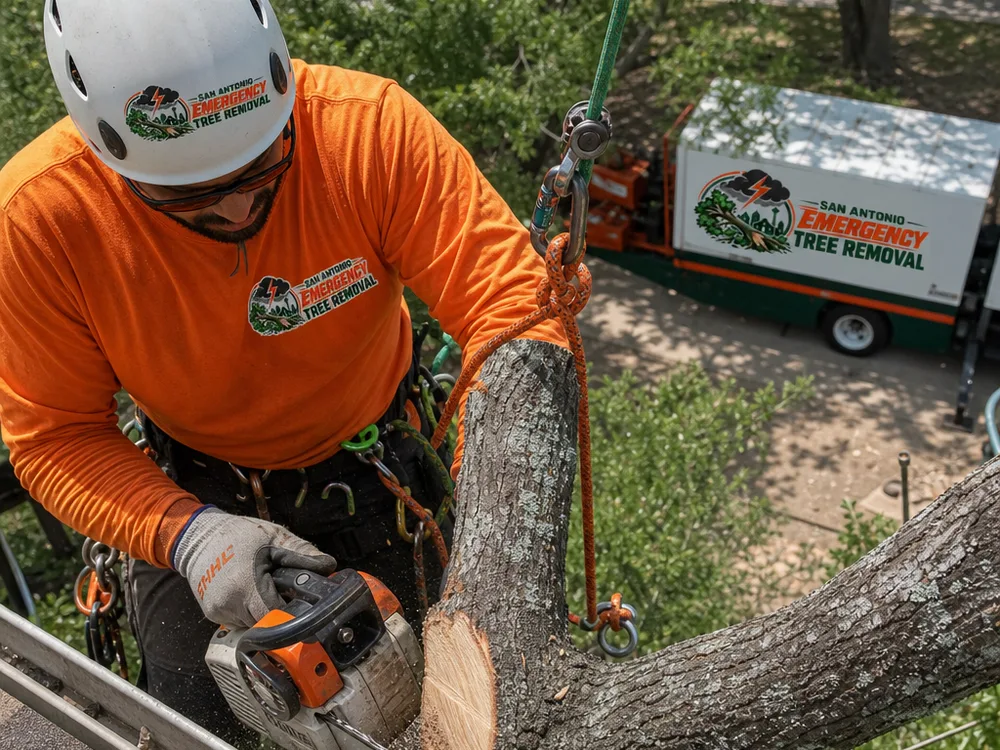
We look at tree species, canopy structure, visible defects, and what is under the work area—rooflines, driveways, fences, and utility lines—then outline what will be removed and why.
We set climbing lines or equipment access, establish a drop zone, and protect landscaping and hardscapes where practical.
Cuts remove deadwood and manage weight, with selective thinning and reductions to suitable laterals that preserve natural form.
When limbs are over structures or tight property lines, we rig pieces down to prevent impact damage.
We chip and haul debris, rake and blow the work area, then review the result with you and explain what to watch for next season.
San Antonio tree pruning typically ranges from about $200 to $900 for most residential jobs, depending on tree size and how technical the access is. A small ornamental trim may land near the low end, while large shade trees over roofs or tight side yards can run $900 to $2,000+ when rigging and extra labor are required.
Final price changes with height, number of cuts, deadwood volume, proximity to structures, haul-off needs, and whether climbing is required. The exact cost is confirmed after an on-site assessment of the tree and work area.
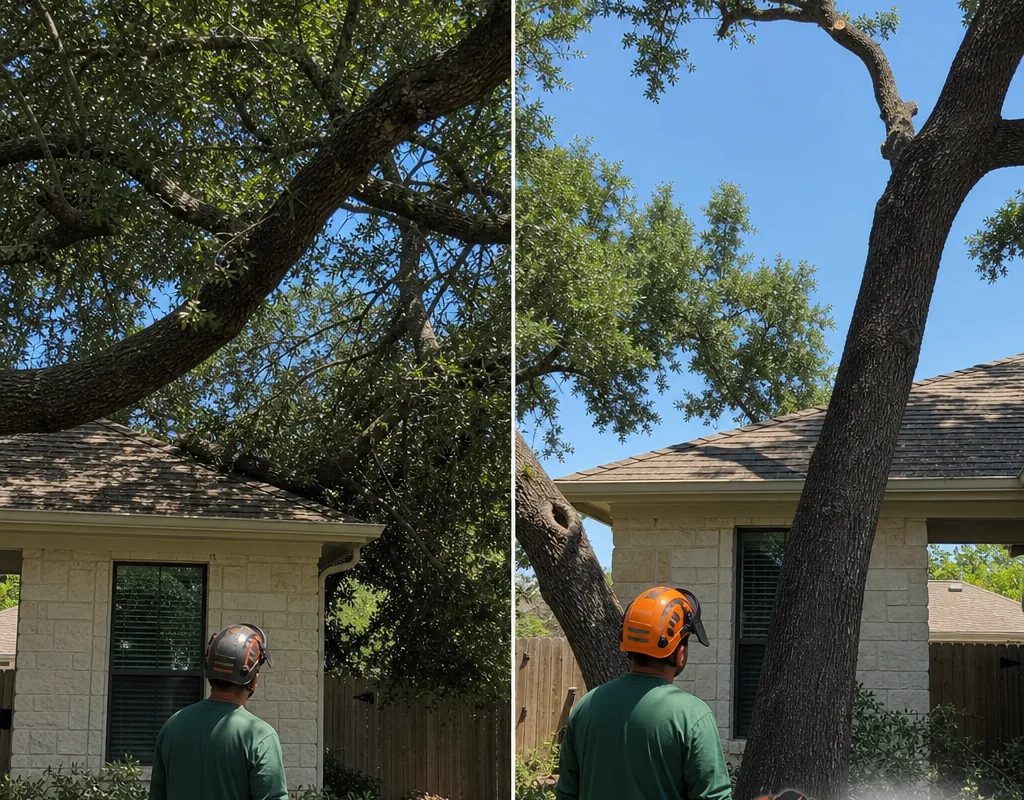
“We had limbs hanging over our roof and driveway after a windy week. They explained what needed to come off, used ropes so nothing hit the house, and the tree still looks natural. Clean-up was thorough.”
“Our live oak had a lot of deadwood and crossing branches. The pruning made a big difference in clearance and the canopy looks balanced, not chopped.”
Schedule pruning before peak storm periods and whenever you see dead, cracked, or overextended limbs, because those are the parts most likely to fail. In San Antonio, fast growth means issues can develop within a season, so an annual check on trees over roofs, driveways, and play areas is a practical baseline.
If a branch is touching or very close to energized utility lines, it may require coordination with the utility provider or a line-clearance qualified crew. We assess the distance and risk on site and recommend the safest path instead of cutting near power lines blindly.
Often, yes, especially when the scope is clear and access is straightforward, but same-day completion depends on crew availability and how technical the rigging will be. If a limb is actively hanging or cracked, tell us up front so we can prioritize the hazard.
Correct pruning should not harm a healthy tree because cuts are made to appropriate laterals and at the branch collar so the tree can compartmentalize the wound. Problems usually come from over-pruning, topping, or leaving ragged tears.
When there is a target below, we use controlled rigging and lower pieces by rope instead of letting them free-fall. That approach is common in established parts of San Antonio where mature trees grew over homes and fences and there is little room for a safe drop zone.
If the tree is on your property, routine pruning is usually straightforward, but rules can change for protected trees or work in certain areas. If you are unsure about requirements for your address or share ownership along a property line, we can discuss the situation during the on-site assessment.
Tell us what you're seeing, where the tree sits on the property, and what it overhangs. We'll assess the risks, recommend practical cuts, and complete the work with controlled lowering and full clean-up.