Fallen trees blocking driveways and streets
Cut-and-clear to restore access, then full removal and hauling so debris does not become the next hazard.
Serving San Antonio, Texas & surrounding areas
24/7 Emergency Response
When a storm drops limbs or puts a tree on a roof, fence, driveway, or power line, you need a crew that can make the area safe fast and clean up completely. San Antonio Emergency Tree Removal handles urgent removals, cut-and-clear, and debris hauling so you can restore access and start repairs.
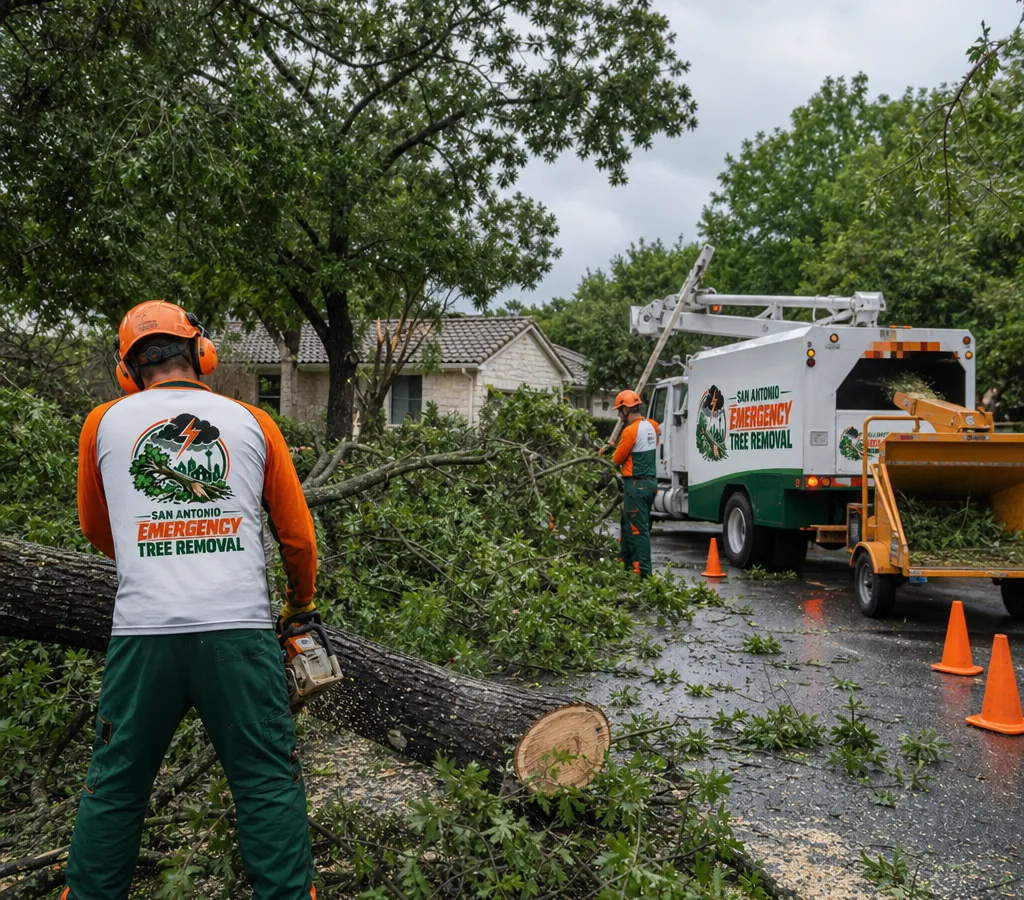
Storm Damage Tree Removal is the work of removing storm-fallen trees, broken tops, and hanging limbs that create an immediate hazard. The first priority is safety: we look for unstable stems, limbs under tension, and any contact with utilities before any cutting begins.
After heavy wind or hail, the biggest risks are not always obvious. A tree can look “mostly upright” while the root plate has shifted, or a large limb can be hung up in the canopy and drop later. We treat these as emergency conditions and plan the cuts to control movement. That means proper rigging, controlled sectioning, and keeping people and property out of the drop zone.
If a tree is blocking a driveway or pinning a gate shut, we focus on restoring access quickly, then finish the cleanup and hauling so you are not left with piles of debris. If your tree is resting on a roof, fence, or vehicle, we remove weight in small sections to reduce further damage during the removal.
Storm-damaged trees behave differently than routine removals. Wood fibers can be split, trunks can be loaded with side pressure, and branches can be spring-loaded. Cutting the wrong place first can cause a sudden shift.
Our approach starts with a quick site plan: establish the work zone, identify pinch points and tension, and choose removal methods that match the situation. For example, a tree that fell and is supported by another tree may need to be dismantled in pieces with rigging rather than cut free at the base.
We also coordinate around local utility hazards. If a tree or limb is touching overhead lines, we keep the area clear and do not attempt to move it until the proper utility response is in place. On customer property, we focus on controlled removal and debris management so crews doing roof or fence repairs can get in safely afterward.
For non-storm situations or planned removals, you may be looking for a broader Tree Removal Service to compare options and scheduling. Storm damage work is different: the goal is to make the site safe and usable as quickly as conditions allow.
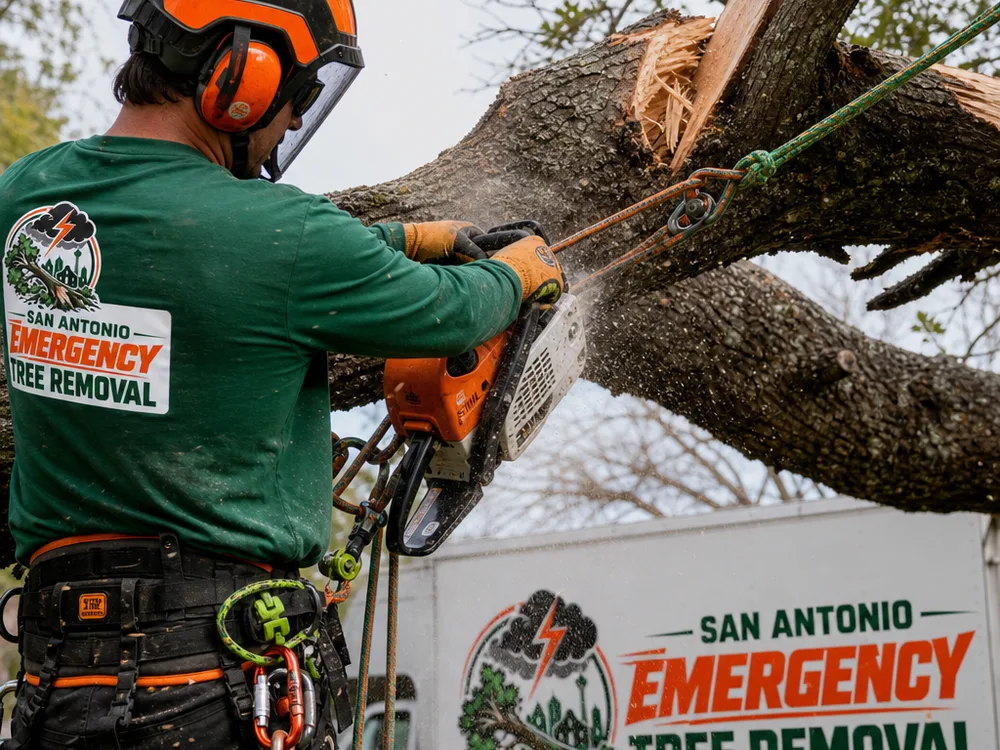
Cut-and-clear to restore access, then full removal and hauling so debris does not become the next hazard.
Sectional removal to reduce load gradually and avoid making the damage worse while the tree is being taken off the structure.
Removal of suspended limbs and cracked leaders before they drop, especially over parking areas, patios, and play spaces.
Assessment for stability and controlled removal when the root plate has shifted or the tree is no longer structurally sound.
Chipping and hauling of storm debris, including large limb wood, so the property is clear for repair work and normal use.
San Antonio properties often have a mix of mature trees and tight setbacks, which changes how storm work is done. In neighborhoods like Alamo Heights, large shade trees can overhang roofs and drive lanes, so storm removals frequently require careful piece-by-piece lowering rather than letting sections drop. In Stone Oak, many homes have narrow side yards and landscaped back patios, so access and staging matter as much as the cutting itself. Around King William and other older areas near downtown, trees may be close to alley lines and overhead services, which affects work zones and debris routing.
After major storms, timing matters. Wet ground can reduce traction for equipment and make already-shifted root plates more likely to move. We plan for safe footing, stable staging, and controlled loads instead of rushing heavy pieces through tight spaces.
If you are dealing with multiple downed limbs, we can prioritize the hazards first—anything over people, vehicles, or entrances—then finish the full debris removal so you are not left with a half-cleared yard.
We confirm the location, what is blocked or damaged, and whether any lines or structures are involved. On arrival, we set the work zone and identify tension, hang-ups, and unstable stems.
You get a clear description of what will be removed, what will be left, and how debris will be handled. If access is limited, we plan for sectional removal and controlled lowering.
We remove weight in manageable pieces, using ropes and rigging where needed to protect roofs, fences, and landscaping and to control movement.
We chip and remove storm debris, then rake and clear the work area so you can regain normal use of the property and proceed with repairs.
Storm damage tree removal in San Antonio typically ranges from about $350 to $1,500+ for many residential jobs, with complex hazards running higher. A smaller downed tree or a few large limbs that can be cut and hauled from open access often lands around $350 to $750, while trees on structures, heavy rigging, or tight access commonly run $900 to $3,000+.
Price depends on tree size, what it is resting on, whether rigging or cranes are needed, access and debris volume, and whether the wood is under tension or unstable. Exact pricing is confirmed after an on-site inspection and a written scope.
“A big limb came down across our driveway after the storm and we could not get a car out. They showed up, set a safe work area, cut it up in controlled sections, and had the driveway cleared fast. Cleanup was thorough.”
“We had a tree leaning toward the house after high winds. They explained what was unsafe, removed it without tearing up the yard, and hauled everything away the same day.”
Yes, in many cases a fallen tree can be removed from a roof by taking it off in small, controlled sections. The key is reducing weight gradually with proper cutting order and rigging so the trunk or limbs do not roll, slide, or lever against the structure during removal.
Treat it as an active electrical hazard and keep everyone away from the area. Do not try to cut, move, or even pull limbs off a line; wait for the utility response and then proceed with removal once the area is confirmed safe to work around.
Same-day help is often possible, especially for blocked driveways, unsafe hangers, or trees on structures, but availability depends on storm volume and site conditions. The fastest way to move forward is to request an urgent assessment so we can triage the hazard and schedule the crew and equipment needed.
We can haul away debris as part of the job, and you can also choose to keep some cut wood if it is safe and practical to stage on your property. Just tell us what you want kept before work starts so we can cut and place it where it will not block access or create trip hazards.
If the trunk is split, the tree has a major lean with root movement, or primary structural limbs have failed, removal is often the safer option. If the damage is limited to smaller limbs and the main structure is stable, targeted trimming to remove broken or hanging wood may be enough, and we will explain the safety factors we see on site.
Yes, we can prioritize access restoration when a downed tree blocks a driveway, gate, or walkway. Once the immediate access is restored, we complete the full cut-up, chipping, and hauling so the property is truly cleared and ready for repair work.
Tell us what happened, what is blocked or damaged, and whether any lines or structures are involved. San Antonio Emergency Tree Removal will provide a clear plan and handle the removal and cleanup so you can get back to a safe, accessible property.