Hazard trimming and storm cleanup
We prioritize cracked, hanging, or partially attached limbs first, set safe drop zones, and handle brush and wood removal so you are not left with piles after the crew leaves.
Serving San Antonio, Texas & surrounding areas
24/7 Emergency Response
Safer canopies, cleaner cuts, and fast help after storms. We trim for clearance, structure, and hazard reduction, then haul debris and leave your property tidy.
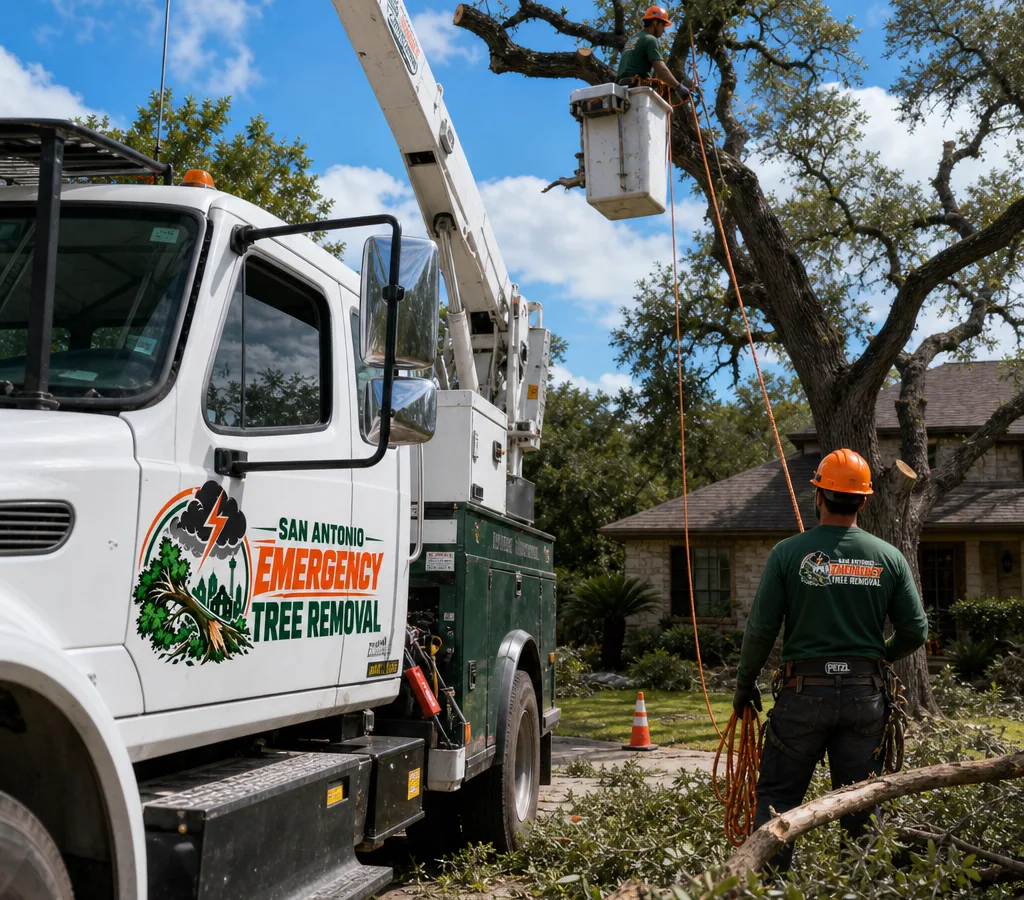
If you searched for tree trimming San Antonio TX, you are probably dealing with one of the common issues we see around town: limbs over the roofline, branches rubbing a structure, low clearance over a driveway, or storm-damaged hangers that need attention quickly.
San Antonio Emergency Tree Removal provides tree trimming and pruning for safety and long-term tree health. That means using correct cuts at the branch collar, keeping weight balanced, and trimming with a plan rather than taking random limbs. We can also address urgent hazards after high winds and thunderstorms, when broken limbs are still attached and the risk of a drop zone changes hour to hour.
We work across San Antonio property types, from tighter lots around Alamo Heights where clearance over roofs and sidewalks matters, to larger yards in Stone Oak where mature oaks and cedar elms often need canopy lifting for driveways and visibility, to established neighborhoods near Leon Valley where trees have grown into utility corridors and fence lines. If you are also considering full removal for a declining or structurally compromised tree, we can help you compare when trimming is enough and when removal is the safer choice.
We prioritize cracked, hanging, or partially attached limbs first, set safe drop zones, and handle brush and wood removal so you are not left with piles after the crew leaves.
Trim lower limbs to improve access over driveways, sidewalks, patios, and gates while keeping the canopy shape and weight distribution in mind.
Reduce limb contact with roofs, gutters, and siding to limit abrasion and keep branches from moving against the home in high winds.
Remove dead, broken, or crossing branches and thin strategically where needed to reduce end weight and improve airflow without over-thinning.
If branches are near service lines, we plan the work around safe approach distances and coordinate next steps when the utility provider needs to be involved.
Brush, logs, and rake-up are part of a professional trimming job. We aim to leave the lawn and beds looking cared for, not churned up.
Good pruning is more than making a tree smaller. The goal is a stable structure that can handle wind loads and growth without creating new weak points.
On many San Antonio properties, the biggest risks come from end-weight on long limbs, codominant stems (two leaders competing at a tight angle), and old pruning wounds that never closed cleanly. We look for these issues and recommend the least invasive trim that addresses the hazard.
Common work methods include canopy reduction (selective shortening back to appropriate laterals), canopy lifting (raising for clearance), and deadwood removal. We avoid topping, which creates fast, weak regrowth and can turn a manageable tree into a repeat hazard.
Access also changes the approach. A backyard with tight gate access may require controlled rigging and smaller piece removal. An open front yard may allow bucket access and faster brush handling. Either way, the plan starts with protecting what is under the tree: roofs, fences, vehicles, and landscaping, plus setting a clear drop zone before any cuts begin.
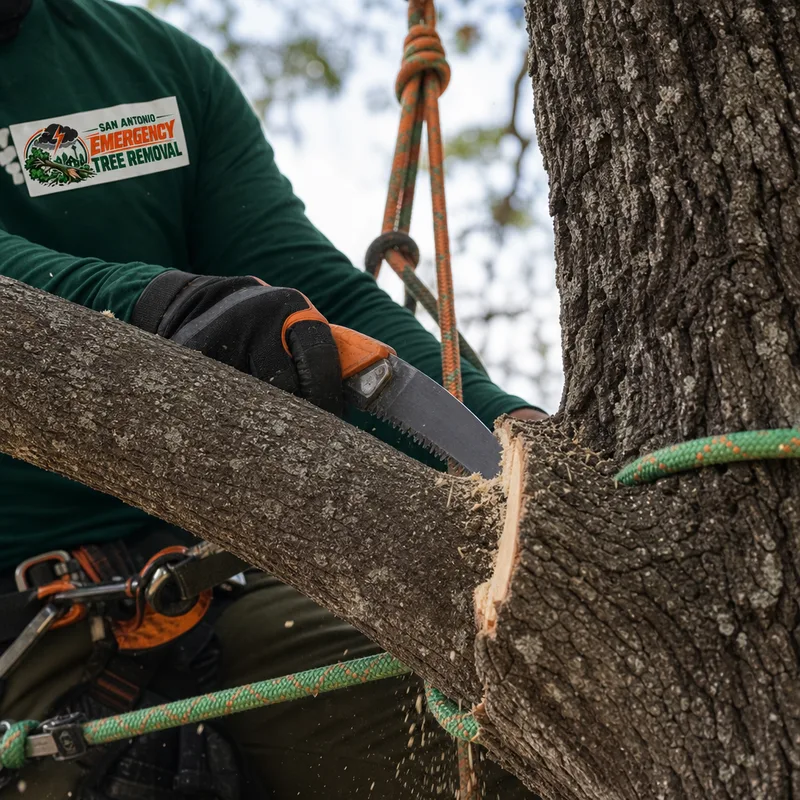
We look at the whole canopy, identify priority limbs, and check targets below (rooflines, patios, driveways, fences, and neighboring property lines).
You get a clear description of what will be trimmed, what will be left alone, how debris will be handled, and any access needs such as gates or parked vehicles.
We establish a safe work zone, plan lowering routes for heavy wood, and protect areas that can be damaged by falling brush.
Cuts are made with the end result in mind: clearance, balance, and health. Limbs are lowered in pieces when targets and tight quarters require it.
We chip, haul, and rake up, then walk the site with you so you can confirm the scope was completed before we pack up.
Tree trimming in San Antonio typically ranges from about $200 to $700 for straightforward pruning on a small to mid-size tree, while large trees, multiple trees, or technical rigging near roofs and lines commonly run $800 to $2,000+ depending on complexity.
Price depends on tree size and species, how much is being trimmed (deadwood vs. structural reduction), access for bucket equipment, proximity to targets like roofs and fences, and the amount of brush and wood haul-off. The exact cost is confirmed after an on-site assessment so the scope and safety plan match what is actually in the canopy.
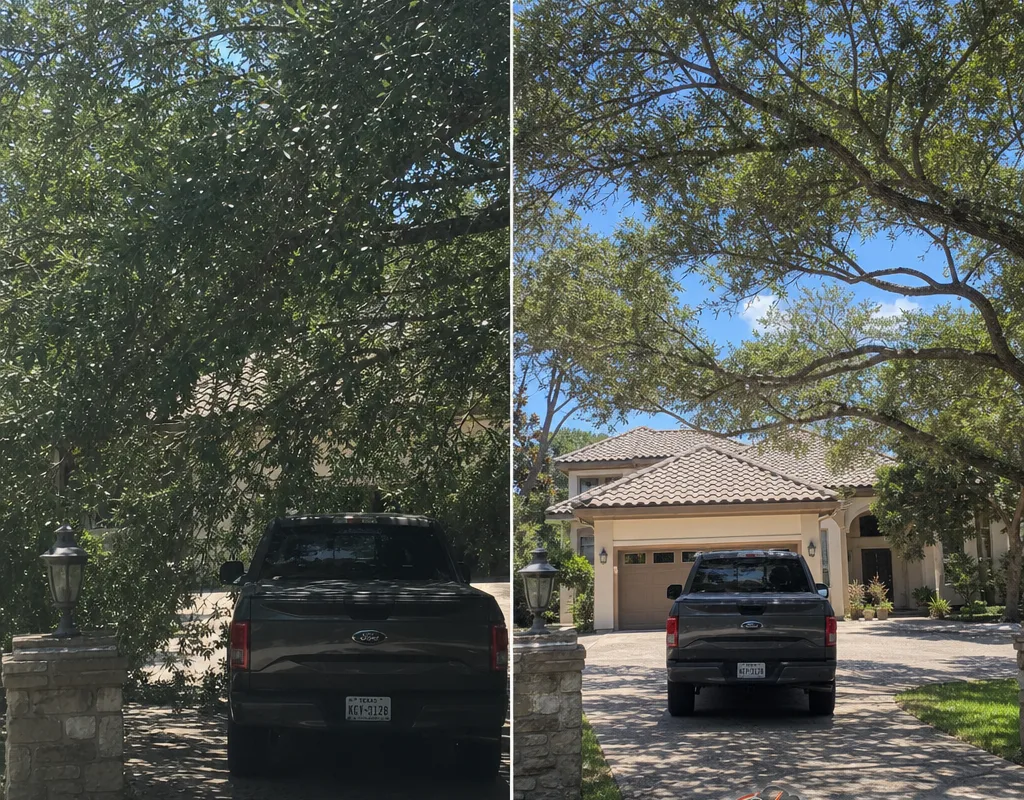
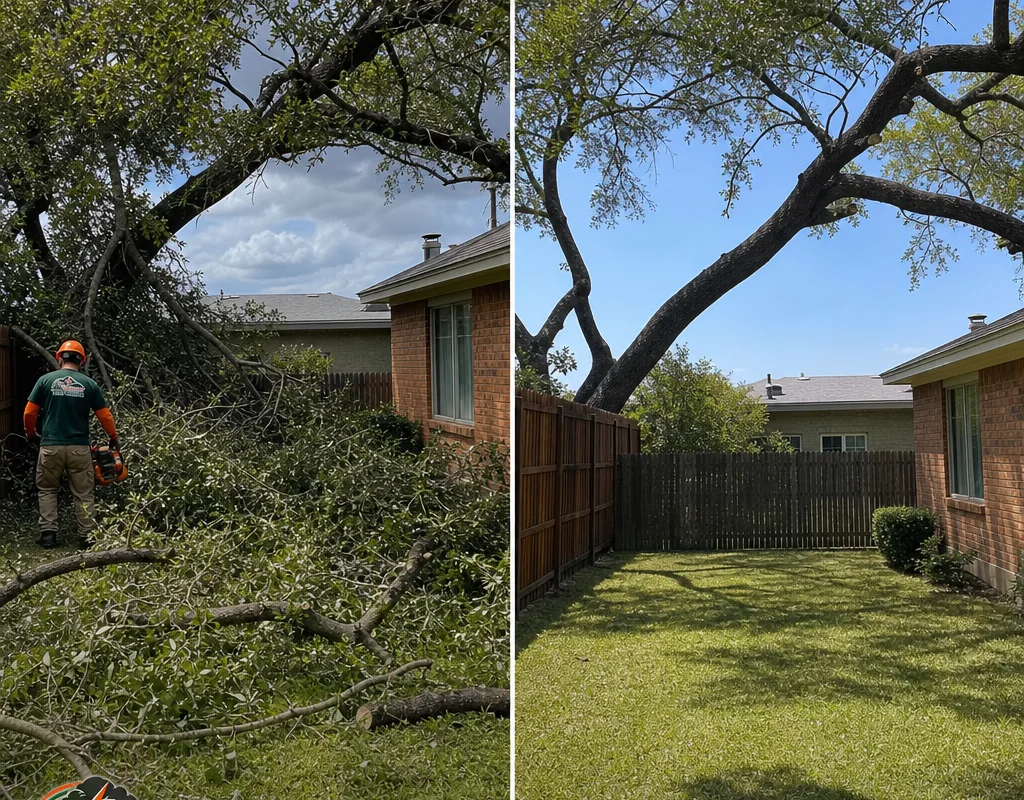
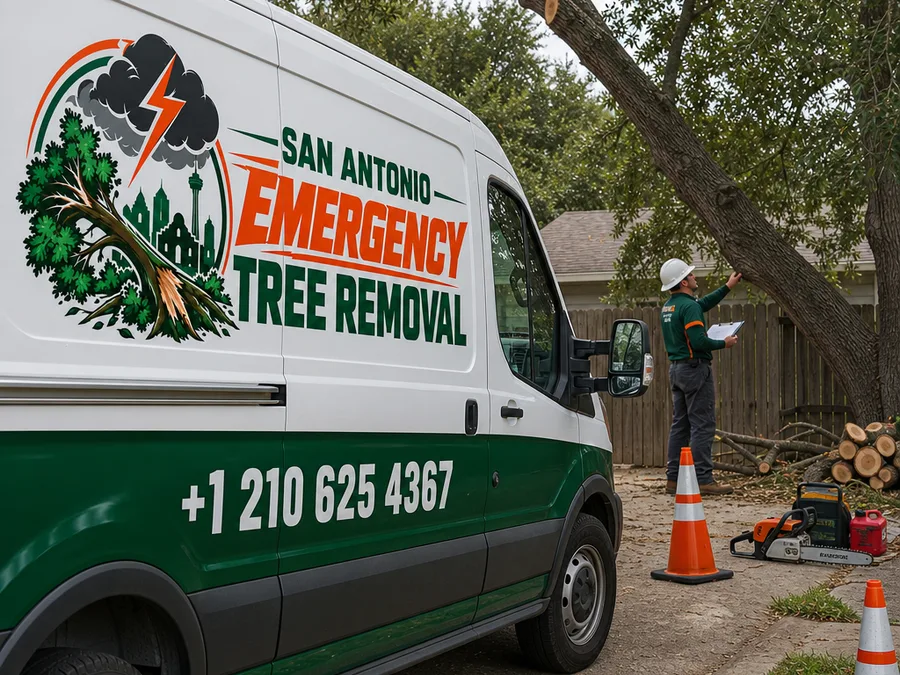
Yes, when a tree has broken or hanging limbs creating an urgent hazard, we prioritize quick scheduling based on risk and access. After San Antonio thunderstorms, the most time-sensitive issues are partially attached limbs over roofs, driveways, or walkways, and branches that have shifted into contact with service lines.
Trimming is often the right choice when the trunk and main structure are sound and the issue is clearance, deadwood, or end-weight on limbs. Removal is more likely when there is major trunk decay, a split main leader, severe root plate movement, or repeated failures that trimming cannot correct; an on-site look is the safest way to decide.
Proper pruning should not harm a healthy tree when cuts are made correctly and the amount removed is reasonable for the canopy. Problems usually come from topping or stripping out too much interior canopy at once, which can trigger weak regrowth and sun stress in the remaining limbs.
If branches are near energized lines, the safest approach may involve the utility provider depending on the line type and location. We will assess the situation on site, explain what can be done safely, and outline next steps if utility coordination is needed before pruning can proceed.
Yes, standard professional tree trimming includes collecting brush and wood and cleaning up the work area. If you want to keep firewood lengths or mulch, let us know during the scope walk-through so we can stage it where you want it.
The best timing depends on the tree and the goal, but hazard pruning can be done whenever needed. Many homeowners schedule routine trimming outside the hottest stretch of summer when possible, then handle urgent clearance and storm damage as it happens.
If a limb is over your roof, driveway, or walkway, getting it trimmed quickly can prevent a small issue from becoming a property damage claim after the next round of wind.
Call for a Free EstimateTell us what you are seeing (storm damage, clearance problems, dead limbs, or overgrowth) and we will schedule an on-site assessment in San Antonio with a written scope, a safe approach, and full debris cleanup.